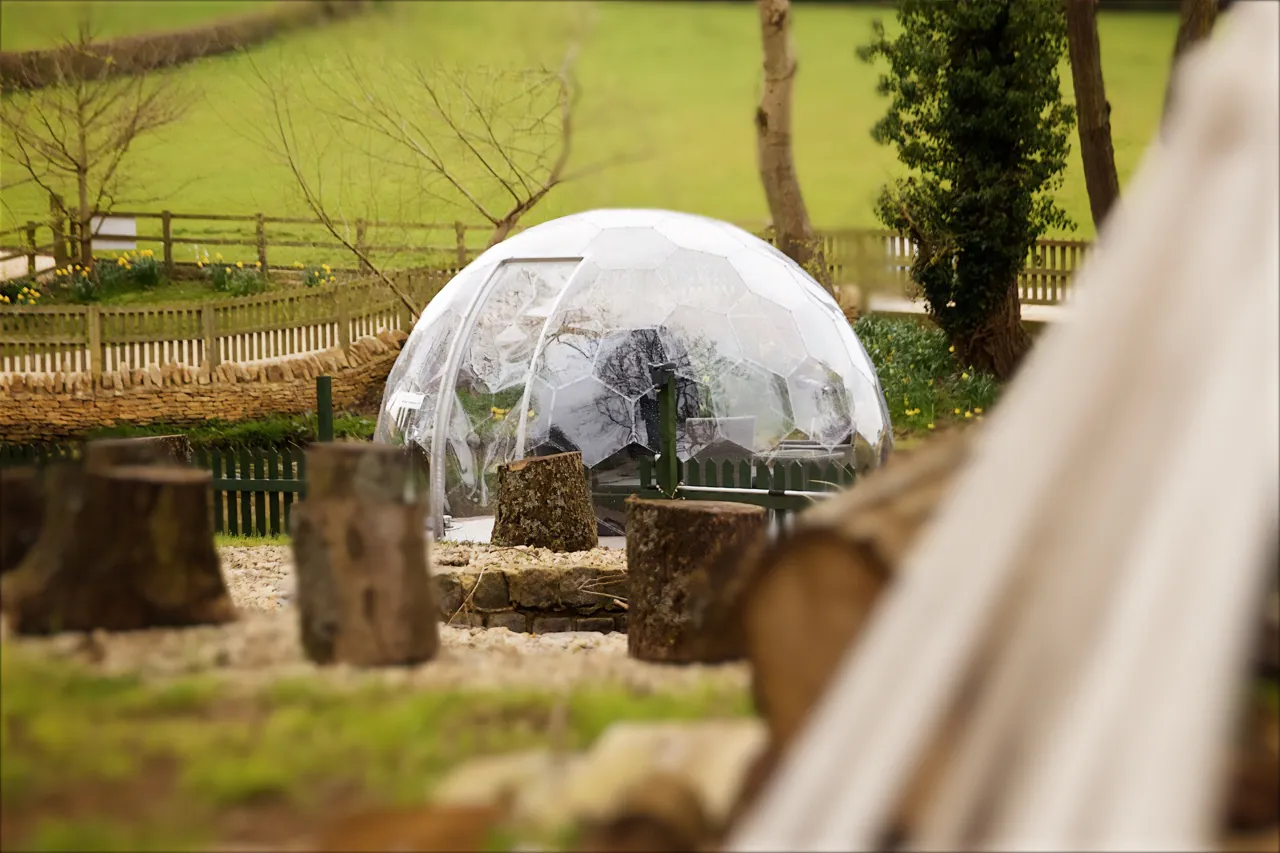



Cassandra had written off the far corner of her orchard. The spot was gorgeous — old fruit trees, dappled light, the kind of place you dream about sitting in with a book and a cup of tea. But in Ireland, “gorgeous” and “usable” are two very different things. “It’s wild and windy, especially in one beautiful corner full of fruit trees,” she told us. She’d sit outside maybe two or three days a year. The rest of the time, the wind made it pointless.
Then she watched a friend’s dome survive Storm Eowyn — a storm that tore through Ireland with some of the worst conditions in years. The dome stayed standing. It stayed cozy. That was enough to convince her. She ordered a Hypedome in April, set it up in her orchard, and now she’s out there almost every day.
If you’re reading this, you probably have the same question Cassandra had before she saw that dome still standing after a named storm: can a transparent garden dome actually handle serious weather?
The short answer is yes. Hypedome is wind-tunnel tested to 150 km/h (93 mph), rated for sustained winds of 120 km/h, made from solid polycarbonate panels with the impact resistance of riot shields, and has been in service through real British storms, hurricanes on the Thames, and Atlantic winds in Cornwall. Below is the long answer, with the engineering data, the customer stories, and the FAQ at the end.
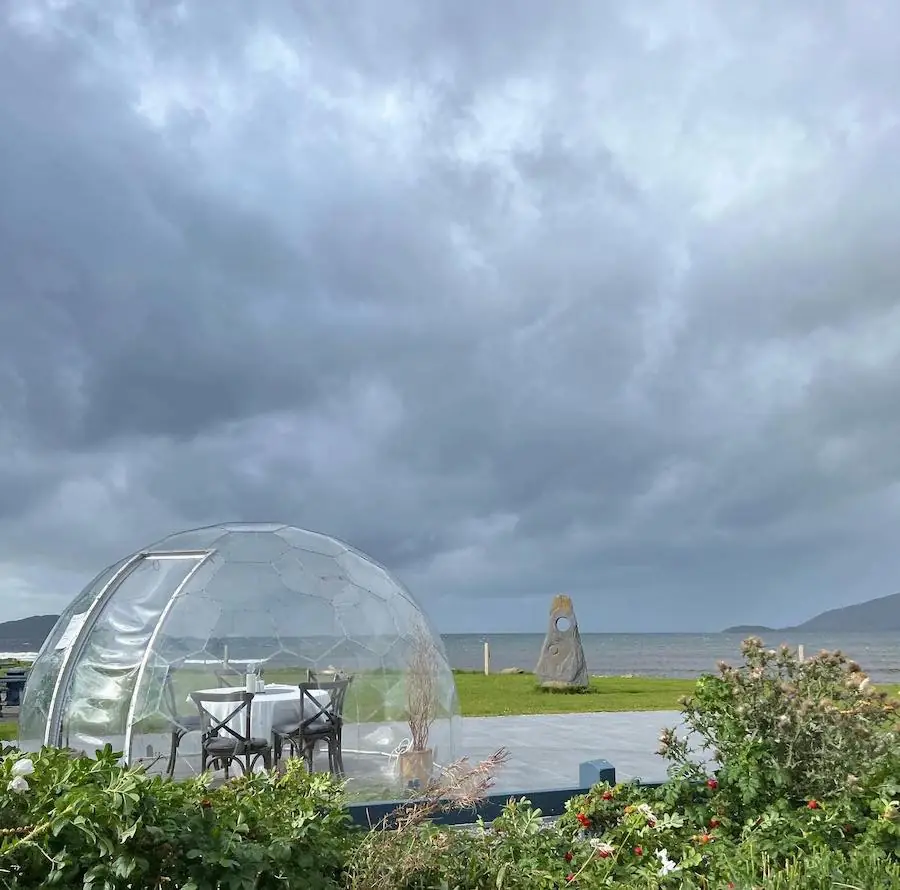
The first thing most people worry about is wind. A dome looks lightweight. It looks like it might catch the wind like a sail and end up in the neighbour’s garden. That instinct makes sense — but it gets the physics exactly backwards.
A geodesic dome is one of the strongest structures in architecture relative to its weight. The hexagonal panel design distributes force evenly across the entire surface, which means wind doesn’t concentrate pressure on any single point. Instead, it flows around the dome the same way it flows around a boulder. There are no flat faces to catch gusts, no corners to create turbulence. The aerodynamic profile of a dome is fundamentally different from a wall, a fence, or a flat-roofed garden room.
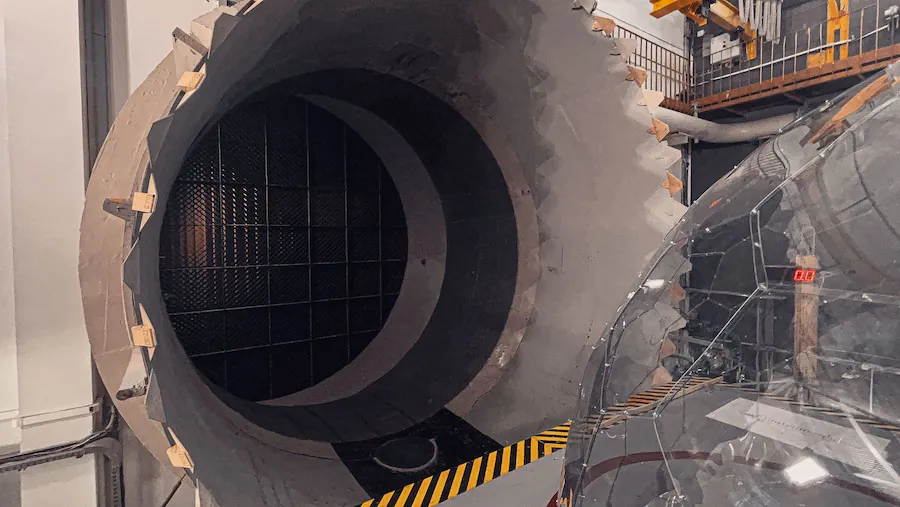
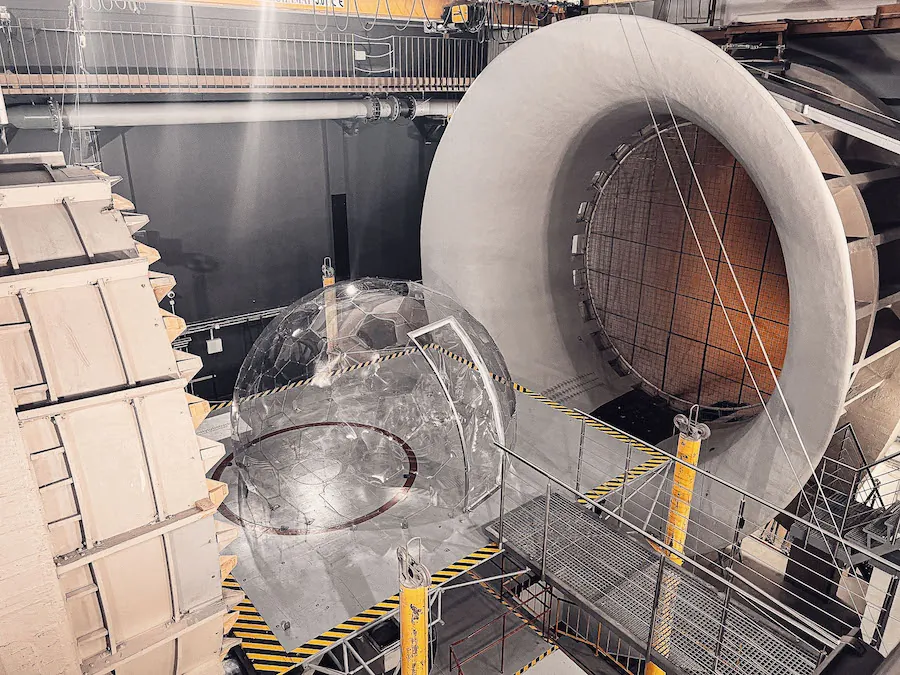
Hypedomes are officially rated for sustained winds of 120 km/h (around 75 mph — hurricane-force on the Beaufort scale), and were stress-tested at the Warsaw Institute of Aviation wind tunnel at sustained speeds up to 150 km/h (93 mph). But the real proof isn’t in a lab. It’s in real British gardens.

Down in Cornwall, Duncan and Ania Nicholls have a Hypedome that “effortlessly stands up to the 70 mph winds that occasionally come off the Atlantic.” That’s around 113 km/h — solidly into Beaufort force-11 ‘violent storm’ territory. Up in London, Milli Abrams installed a Hypedome on a barge moored on the River Thames; a month later, a hurricane swept through the city. “The dome stood intact and didn’t even move,” she told us.
The aerodynamics work even in extreme exposed positions. Chantal and Adam set up their Hypedome on a ninth-floor London roof terrace, where height multiplies wind speed. “The shape of the dome helps the wind flow over its surface,” Adam explains — “important because of high winds up on the ninth floor.” When you anchor a Hypedome properly to a solid base — a timber deck, a concrete pad, or paving slabs — you’re creating a connection between a load-distributing shell and a stable foundation. That combination is what gives the dome its rigidity.
If wind is the number-one concern in the UK, snow is a close second — especially for anyone who remembers the Beast from the East. The dome handles it through geometry rather than brute force.
The curved shape works in two ways. First, the geometry naturally sheds snow. Unlike a flat roof where snow accumulates and creates concentrated loading, a dome’s curvature encourages snow to slide off as it builds up. Second, when snow does sit on the surface temporarily, the load is distributed across the entire shell rather than pressing down on a single beam or rafter.
The polycarbonate panels themselves are a key part of this equation. Solid polycarbonate is the same material used in riot shields and aircraft canopies. It’s virtually shatterproof. It won’t crack under snow load the way glass would, and it won’t degrade under UV exposure the way acrylic does. You could stand on a Hypedome panel and it would flex before it broke — and that flex is by design. A small amount of give allows the structure to absorb impact forces rather than transferring them rigidly.
For UK owners specifically, the snow conditions you’ll encounter are well within what the dome handles routinely in far harsher climates. British snowfall rarely exceeds 10–15 cm in a single event, and it rarely sits for more than a few days. Your dome will shrug it off.
Rain is the weather most UK dome owners actually deal with day-to-day. And here, the dome doesn’t just survive rain — it transforms it into something enjoyable.
The dome is engineered to be waterproof. Each hexagonal panel overlaps the one below it like fish scales — from the apex down to the base ring — and stainless-steel connectors hold each overlap in place. Rainwater runs down the curved surface without ever hitting an upward-facing seam, and there are no flat areas or gutters where water can pool or collect.
What dome owners consistently tell us is that rain becomes a feature rather than a problem. Sitting inside a dome while rain runs down the curved panels around you is genuinely atmospheric — more than one owner has compared it to being inside a rain globe. The sound is present but muted, not the drumming you’d get on a corrugated plastic roof or a conservatory.
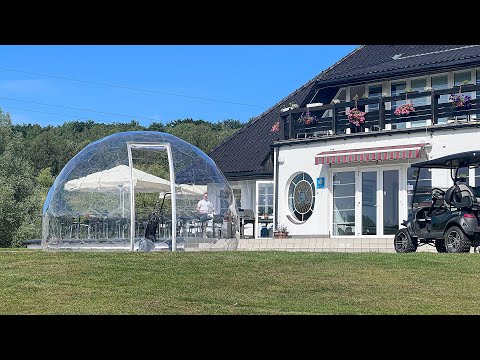
As for hail, the polycarbonate panels have the impact resistance to handle it. Standard UK hailstones — typically 5 to 15 mm in diameter — won’t mark or damage solid polycarbonate. It’s rated for impact resistance far beyond what British weather will throw at it. Even in parts of the US Midwest where hailstones can reach golf-ball size, polycarbonate holds up where glass and thinner plastics fail. Hypedome tested this directly by throwing golf balls at the dome from close range on a golf course — not a single mark or dent.
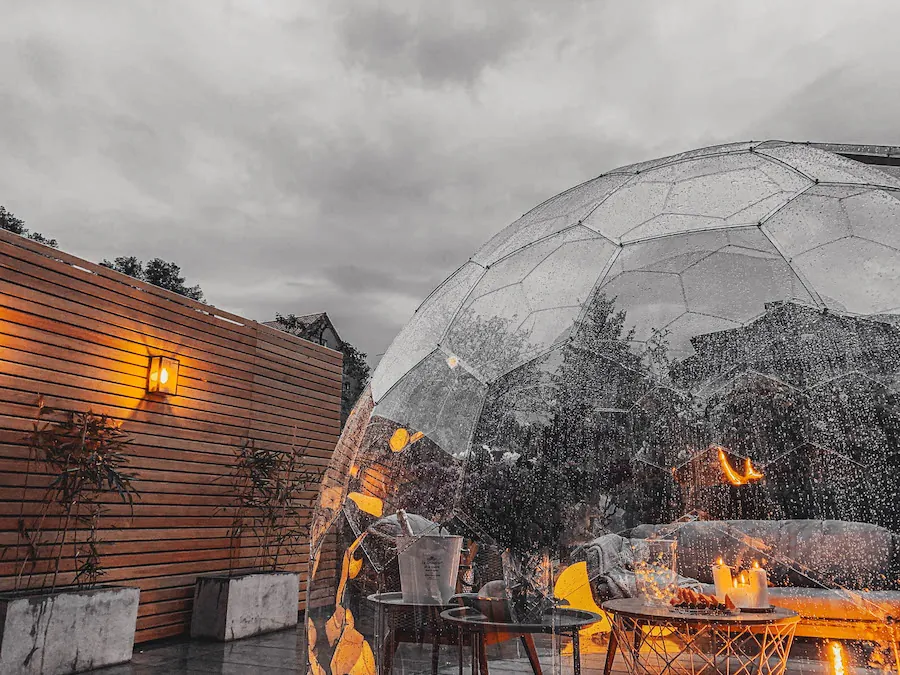
If you’re wondering whether a dome is a three-season structure that you’ll abandon from November to March, the answer from UK owners is a clear no — in fact, several use their domes more in winter than in summer.
The dome’s shape actually helps here. A sphere encloses the maximum volume for the minimum surface area, which means you have less surface losing heat compared to a rectangular structure of the same usable space. Add Hypedome’s Hype.Wall insulation panels and you dramatically reduce heat loss while keeping the dome aesthetic intact.
UK winter temperatures rarely drop below -5°C even in Scotland. A Hypedome with a modest electric heater is comfortable through every month of the year. The enclosed space captures whatever solar warmth is available during the day, and a small heater handles the rest. Cassandra in Ireland made exactly this point: “Most of the time we’re trying to keep the heat in here in Ireland.” Even in Ireland’s damp, grey winters, the dome holds warmth effectively.
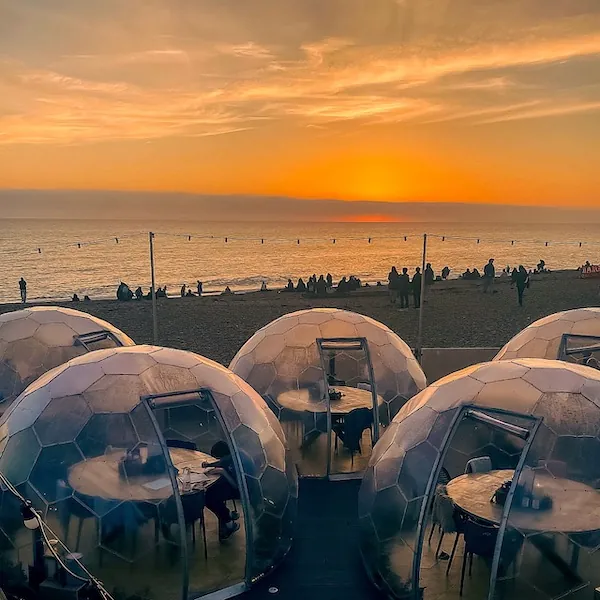
A transparent dome spends its entire life exposed to ultraviolet radiation. If the panels weren’t designed for this, you’d see yellowing, hazing, and brittleness within a few years — the same fate that hits cheap greenhouse panels and conservatory roofs.
Hypedome panels are made from solid polycarbonate with UV-stabilised coatings. This isn’t the twin-wall or multi-wall polycarbonate you’d find in a budget greenhouse. Solid polycarbonate maintains its optical clarity and structural integrity for decades under continuous UV exposure. It’s the reason the material is specified for permanent architectural applications, not just seasonal structures.
On hot summer days, the dome can get warm — that’s physics, and any transparent enclosure will experience it. Hypedome addresses this with ventilation options: window panels that open, and shading accessories for peak summer. UK owners typically find that ventilating early in the day plus an optional shade panel is more than enough to keep the dome comfortable through any heatwave a British summer produces.
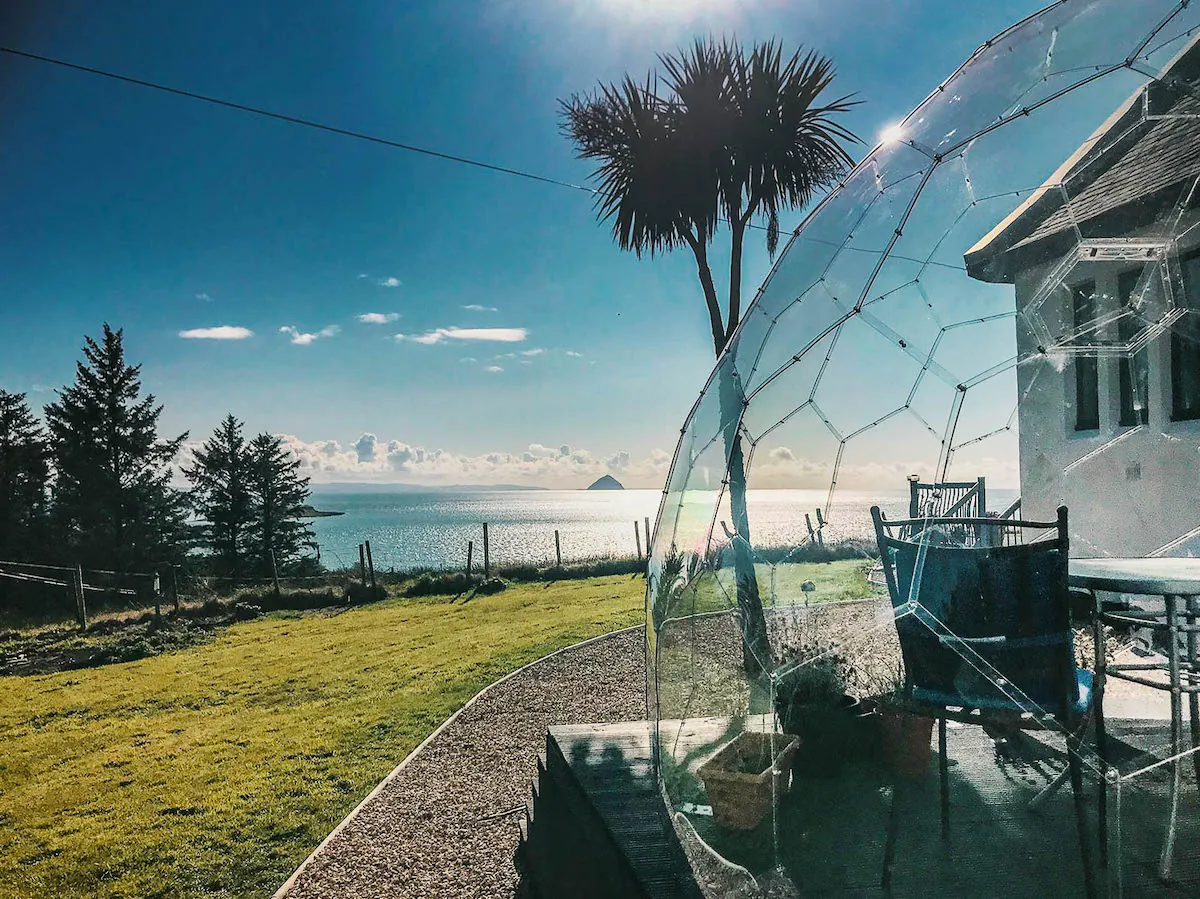
No structure performs well in weather unless it’s properly anchored. A garden shed that’s merely sitting on the ground will shift in a storm. The same applies to a dome — the engineering means nothing if the foundation isn’t right.
Hypedomes come with anchoring feet and deck screws as standard. The recommended approach is to secure the dome to a solid, level surface: a timber deck, a concrete pad, or paving slabs with appropriate fixings. When the dome is anchored at multiple points around its base ring, the entire structure acts as a single unit — forces applied anywhere on the shell are distributed down through the frame and into the ground. For exposed coastal positions, Hypedome’s Heavy-Duty Anchoring kit upgrades to all-stainless components.
For UK conditions, an annual check of the anchoring fixings is more than sufficient — ideally with a quick look after any named storm. The key is getting the initial installation right: level surface, solid anchoring, and following Hypedome’s installation guide. Once it’s in, it’s in.
The good news is that the dome assembly process itself doesn’t require specialist tools or structural engineering expertise. The hexagonal panels click together in a logical sequence, and most owners complete the build in a weekend with one helper. The precision engineering is already in the panels — you’re assembling, not constructing.
One of the practical advantages of a dome over a traditional garden room or conservatory is how little maintenance the weather demands.
There are no gutters to clear. The curved shape means leaves and debris slide off or are blown clear — you won’t find the buildup that blocks traditional roof drainage. There’s no timber frame to rot, no painted surfaces to repaint, and no sealed double-glazed units to fail and mist up.
For routine cleaning, Hypedome recommends rinsing the dome down with a garden hose — that’s usually all it needs. Once or twice a year, a pressure washer is useful for flushing out the micro-gaps between panels and keeping the seams clear. A soft cloth is only needed for stubborn marks like tree sap or dried pollen. The polycarbonate panels resist staining and don’t develop the green algae bloom that plagues north-facing conservatory roofs in damp climates.
The only regular maintenance task is checking your anchoring fixings periodically, especially after severe weather. For most UK gardens, this is a five-minute job once or twice a year. Tighten anything that’s loosened, confirm the base is still level, and you’re done.

Here’s what it comes down to. A Hypedome has been proven in conditions that make British weather look gentle:
70 mph Atlantic winds in Cornwall. Effortless. A hurricane on the River Thames. The dome didn’t even move. High winds nine floors up in London. The shape carries the load. Storm Eowyn in Ireland. Standing and cozy.
The UK throws rain, wind, occasional snow, and the odd heatwave. Your dome is engineered and tested to handle all of it — not theoretically, but proven in real British gardens, on a London barge, on a ninth-floor terrace, and in a Cornish coastal storm.
If weather has been the thing holding you back, it shouldn’t be. The dome is ready. Your garden is waiting.

Yes. Hypedome owners have weathered Storm Eowyn in Ireland, a hurricane on the River Thames in London, and 70 mph Atlantic winds in Cornwall without movement or damage. The dome is officially rated for sustained winds of 120 km/h and was wind-tunnel tested at the Warsaw Institute of Aviation up to 150 km/h (93 mph).
The dome’s curved geometry sheds most snow naturally as it builds up. Whatever remains is distributed across the entire shell rather than concentrated on a single beam. UK snowfall — typically under 15 cm in a single event — is well within the dome’s structural tolerance.
Yes. Hexagonal panels overlap from the apex down to the base ring like fish scales, held in place by stainless-steel connectors, so rainwater runs down the curved surface without hitting any upward-facing seam. There are no flat surfaces or gutters where puddles can form. A correctly assembled Hypedome is reliably waterproof in normal British rain.
A Hypedome can warm up on hot days like any transparent enclosure. Window panels open for ventilation and an optional shade panel is available for peak summer; for typical UK conditions that combination is usually enough. In strongly sun-exposed or south-facing locations, we recommend adding air conditioning to keep the interior comfortable through extended summer heat.
The panels are made from solid polycarbonate — the same material specified for riot shields and aircraft canopies — chosen specifically for its very high impact resistance compared to glass. In Hypedome’s own hail-resistance test, throwing golf balls at the dome from close range left no visible marks or dents. No transparent material is fully indestructible, but solid polycarbonate is among the most impact-resistant options available for outdoor structures.
For routine cleaning, Hypedome recommends rinsing the dome down with a garden hose, and using a pressure washer once or twice a year to flush out the micro-gaps between panels. A soft cloth is only needed for difficult stains. Anchoring fixings should be checked once a year and after any named storm — typically a five-minute job to tighten anything that has loosened and confirm the base is still level.
Want to see how one dome owner transformed her unusable, wind-battered orchard into her favourite daily retreat? Read Cassandra’s full story: Visiting Cassandra’s Garden Dome in a Windy Orchard in Ireland.