


Ask any glamping operator what kept them up at night in their first season and you’ll hear the same worry on repeat: will the bookings actually come? You can model revenue on a spreadsheet all day, but occupancy is where the business case either holds up or falls apart. An empty structure earns nothing, and the margin between a good year and a great one usually comes down to a handful of weekends.
Here’s what’s interesting about the current glamping market: not all structures fill at the same rate. After years of working with operators across the UK, the US, and mainland Europe, we’ve seen a consistent pattern emerge. Geodesic domes tend to outperform cabins, yurts, and bell tents on occupancy — often by significant margins, especially during shoulder seasons and on non-peak weekdays. This post digs into why, using real operator data, industry benchmarks, and the structural economics behind each option.
Most new operators evaluating their first build narrow the decision down to four options: a cabin or shepherd’s hut, a yurt, a bell tent, or a geodesic dome. Each has a personality, a price tag, and a set of real-world trade-offs that show up directly in the booking calendar.
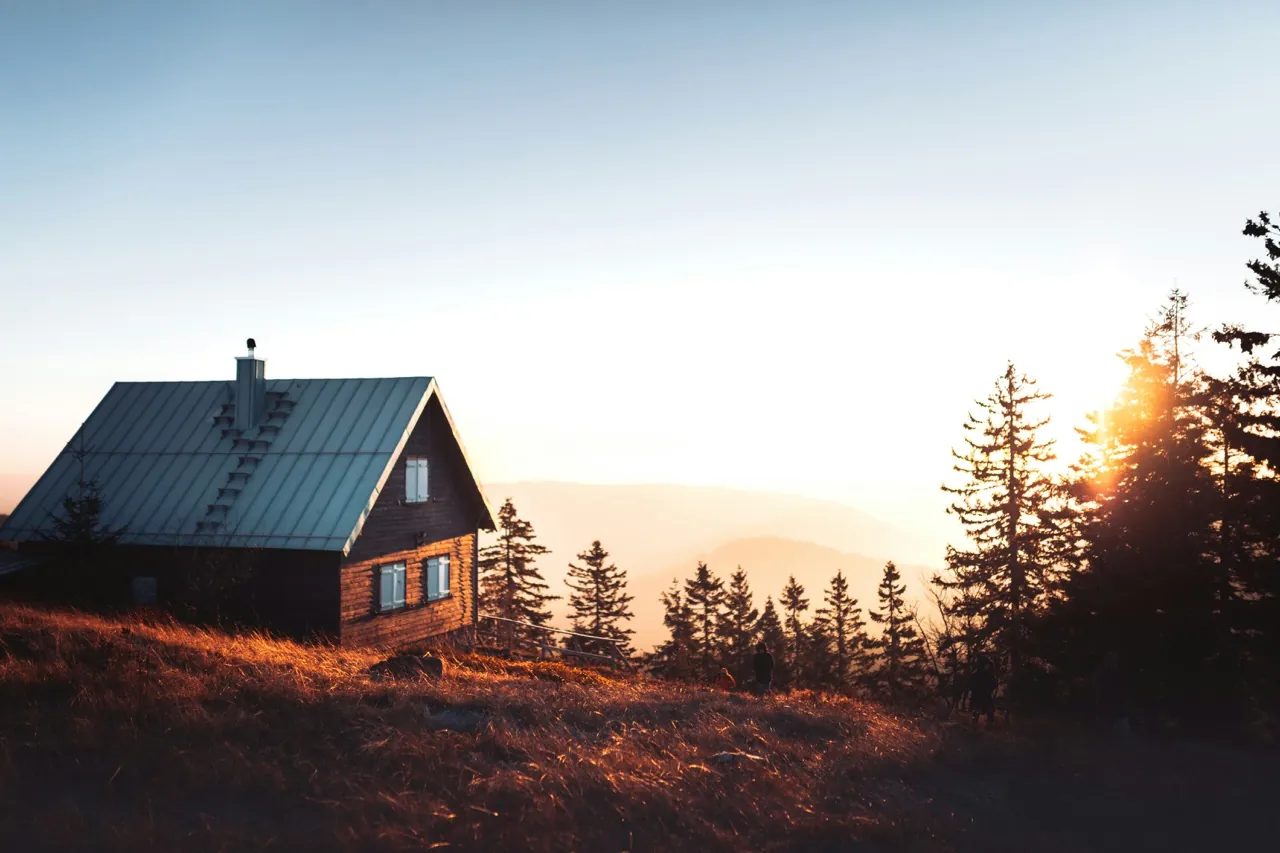
Cabins are the workhorse of the glamping industry. They’re warm, dry, easy to insure, and guests instinctively understand them. Occupancy tends to track closely with the broader self-catering market — anywhere from 35% to 55% annual occupancy depending on location and marketing — which is respectable but unremarkable.
The problem is that cabins don’t drive the “I have to book this” impulse that unique stays thrive on. A timber cabin is essentially a small house, and it competes against every other small-house rental in the area. Unless you have an extraordinary location or design, you’re stuck competing on price and amenities rather than novelty. That caps your nightly rate, which in turn caps what a full booking calendar can deliver.
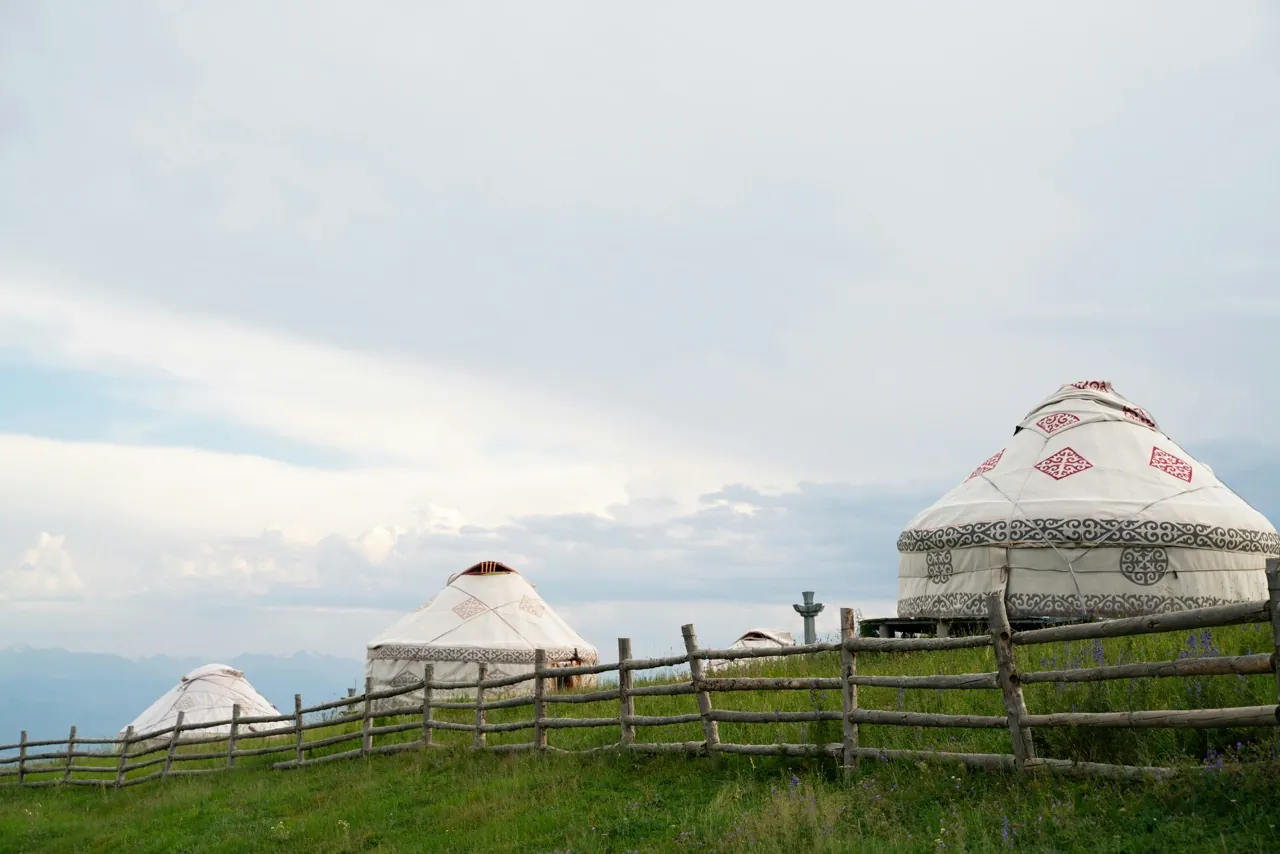
Yurts book brilliantly from May through September in most UK and northern-US markets. They’re romantic, photogenic, and carry genuine cultural cachet. The problem is what happens in October.
Traditional felt yurts can be heated, but their insulation and waterproofing has practical limits. Most UK yurt operators close from late October through March, which compresses their earning window to roughly six months. Even with strong peak-season occupancy — often 70–85% from June to August — a six-month operating season caps annual occupancy at around 35–45% by default. That math simply doesn’t compete with a year-round structure.
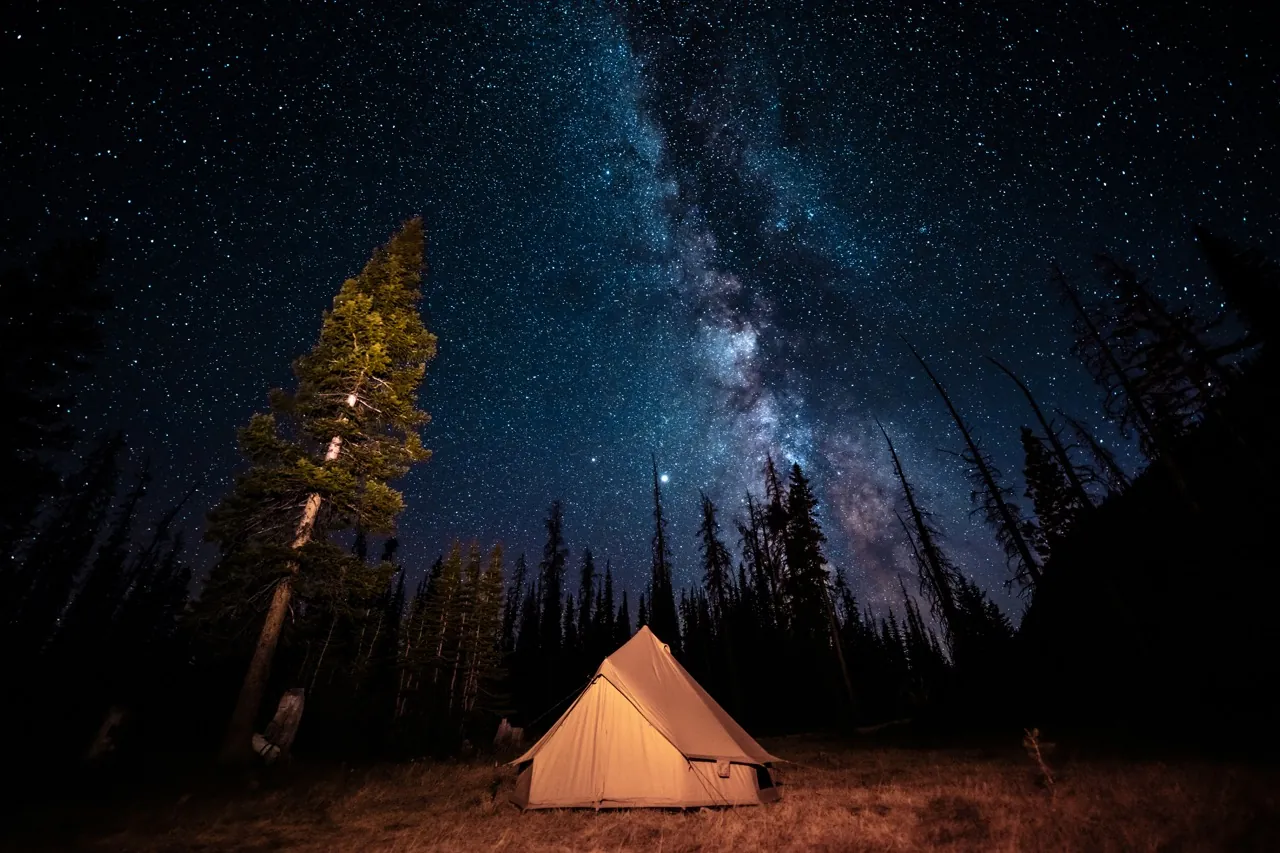
Bell tents are the easiest way into the glamping business. You can set up a small site for a fraction of the cost of any other option, and they fill beautifully for festival crowds, hen parties, and summer weekends. But they’re effectively a four-to-five-month product in the UK climate, and weather cancellations in spring and autumn are a real cost.
Bell tent operators typically see annual occupancy in the 25–35% range once the off-season is factored in. Strong weekend demand in peak months can’t make up for being closed for half the year. They’re a good gateway product, but most operators who start with bell tents eventually migrate to year-round structures because the off-season income gap is too painful to ignore.
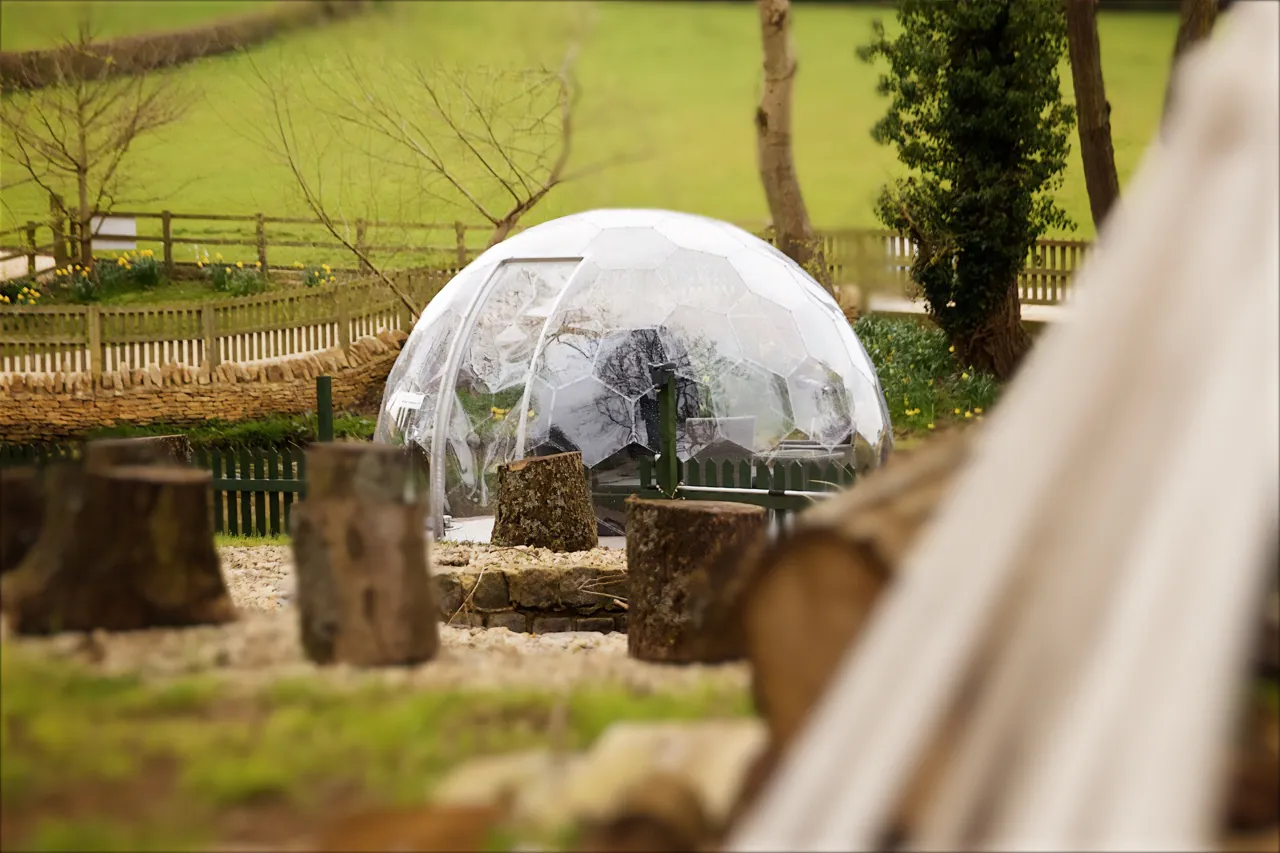
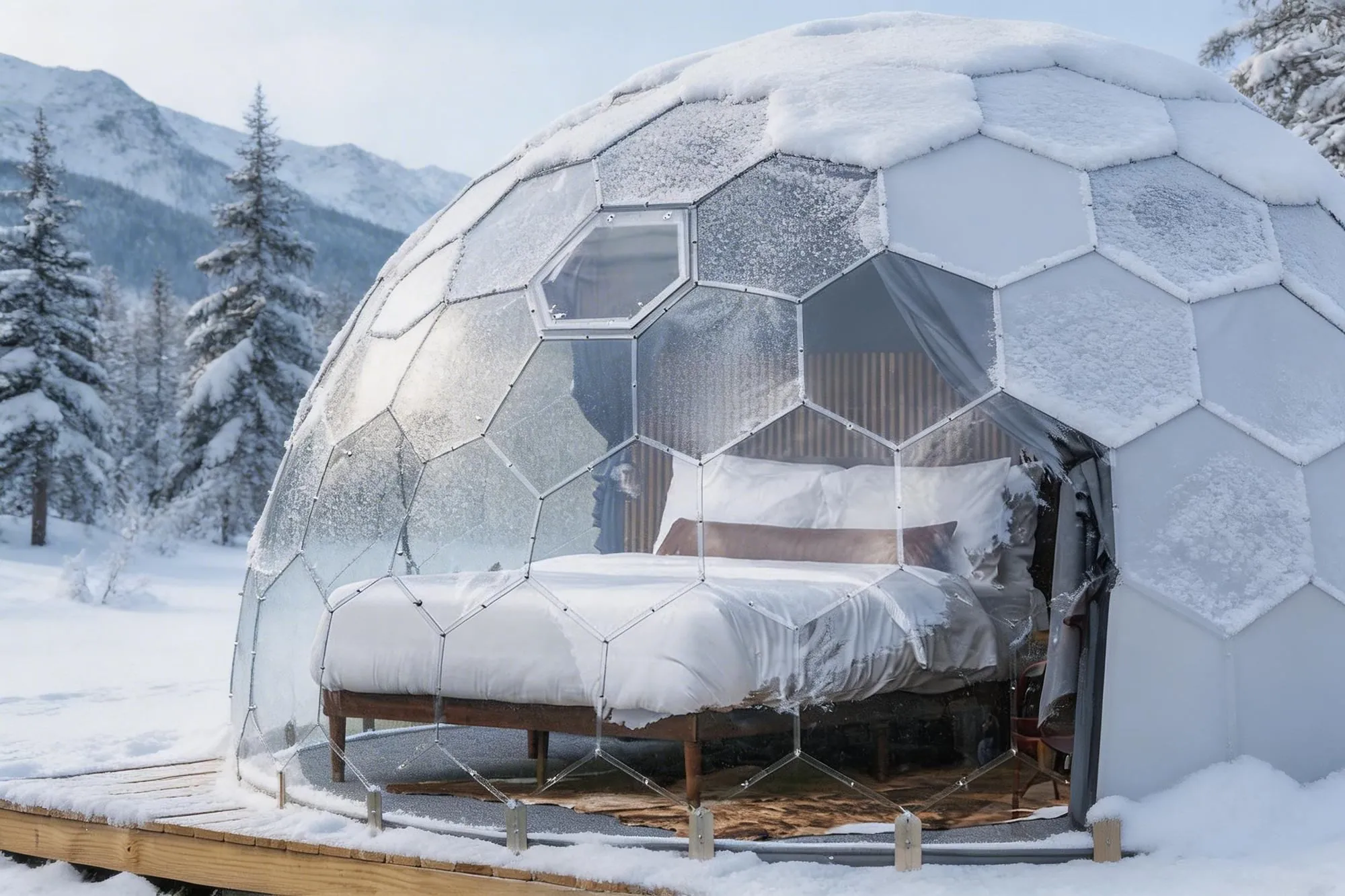
Domes behave differently from all three of the above, and the occupancy data reflects it. Well-run dome rentals in the UK and US routinely hit 60–75% annual occupancy, with some operators we work with reporting even higher numbers during their first full year of operation.
Three structural reasons drive this: domes are genuinely year-round, they carry a strong novelty premium that translates to booking impulse, and they deliver a view-based experience that photographs extremely well on listing platforms. Individually each factor helps. Stacked together, they compound.

The occupancy gap isn’t an accident of marketing. It’s the predictable result of four structural advantages that domes hold over other glamping formats. Understanding each one helps explain why dome operators tend to outperform even when they’re new to hospitality.
This is the biggest driver, and it’s almost pure math. If your cabin competitor is closed four months of the year and you’re open twelve, you have a third more inventory to sell before any other factor comes into play. A dome with proper insulation, a compact electric or wood-burning heat source, and modest winter bedding can comfortably host guests in January and February — months when yurts and bell tents are tarped up and earning zero.
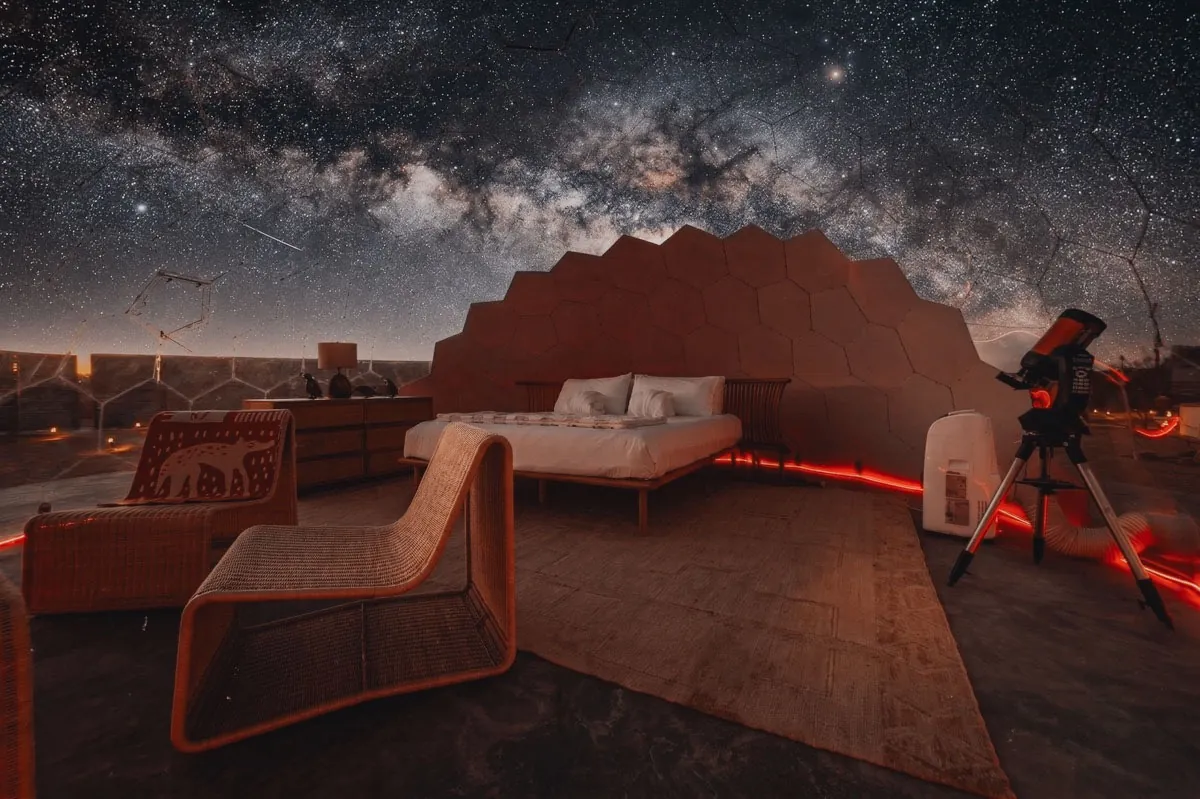
Winter bookings also tend to be experience-led rather than location-led, which protects your pricing. A guest booking a stargazing weekend in February isn’t comparison-shopping against other cottages in the area; they’re booking a specific feeling. That means off-peak demand is less rate-sensitive than it is for a conventional self-catering unit, and off-peak nights can still earn 60–70% of your peak rate.
Platforms like Airbnb, Canopy & Stars, and Hipcamp explicitly promote unique stays, and domes sit squarely in that category. When a potential guest is scrolling through 200 listings in a region, the dome is the one they stop on. That “pattern interrupt” effect shows up in conversion rates on listing pages and, more importantly, in how far in advance dome stays get booked.
Operators regularly report that their dome fills 8–12 weeks out on peak weekends, compared to 2–6 weeks out for more conventional glamping structures in the same market. Longer booking windows mean less last-minute discounting and less gap-filling pressure, both of which quietly erode revenue for operators of standard structures.
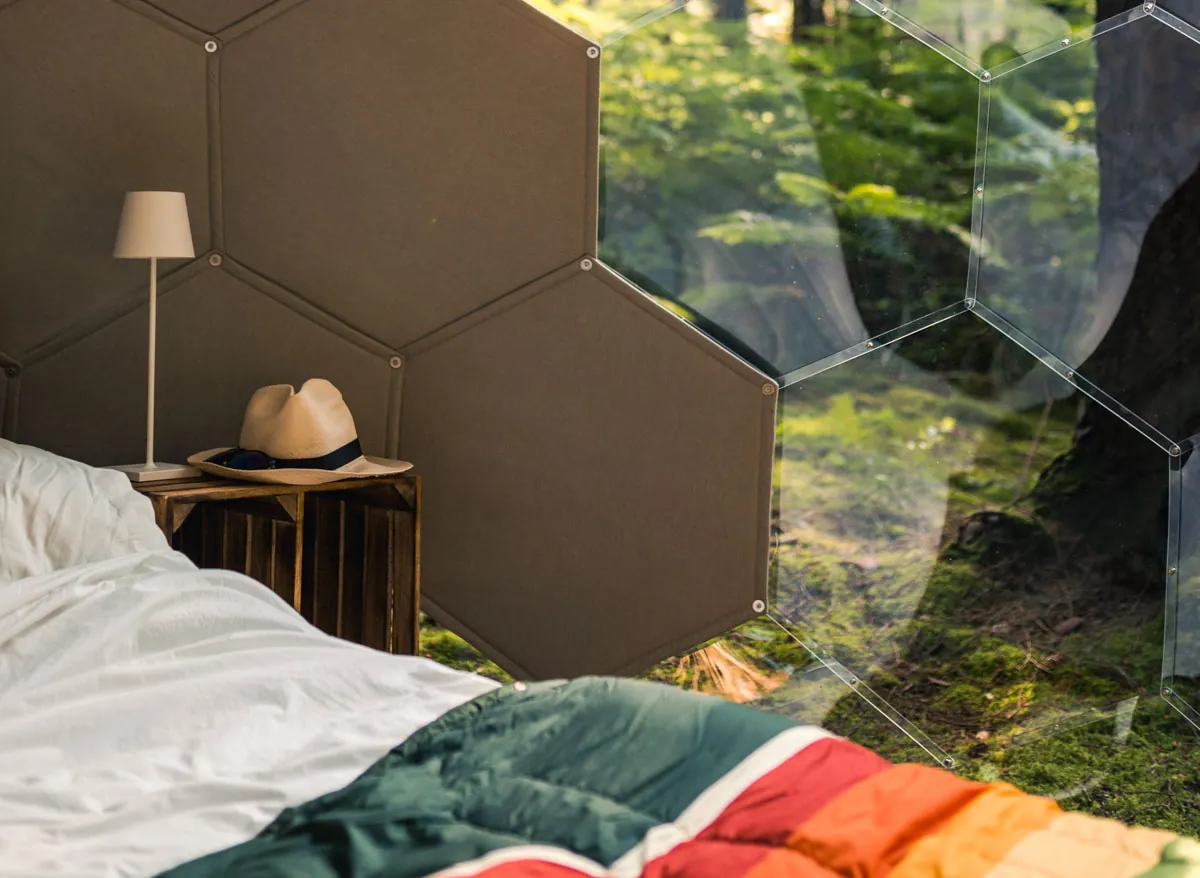
A dome is one of the most photogenic buildings you can put in a landscape. The clear panels create extraordinary interior light, the curved geometry reads well in drone shots, and nighttime interiors with string lights and a fireplace generate the kind of imagery that does organic work for you on Instagram and Pinterest long after the guest has checked out.
This matters commercially because listing platforms reward engagement. Listings with saved imagery, shares, and repeat views climb higher in platform algorithms. Operators we’ve spoken to frequently describe their listings as essentially self-marketing after the first 12–18 months — a compounding advantage that yurts and cabins rarely enjoy.

Higher ADR doesn’t just mean more revenue per night — it gives operators pricing flexibility that lower-rate structures don’t have. A dome averaging £220 / $275 a night can afford to drop to £150 / $190 on quiet mid-week dates and still be profitable. A yurt already priced at £110 / $140 has nowhere to go when demand softens.
That flexibility translates into higher occupancy, because you can fill calendar gaps with targeted off-peak pricing without cannibalising your peak rate. Dynamic pricing tools like PriceLabs work particularly well with domes for this reason: there’s genuine headroom to play with.
Numbers alone only tell part of the story. Here’s what occupancy data looks like when you break it down by structure type for a comparable rural glamping market. These ranges reflect what we see across the operators we work with and publicly reported benchmarks.
Bell tent (6-month season): 25–35% annual occupancy, £80–£140 / $100–$175 ADR, strong summer weekends, heavy weather cancellation risk.
Yurt (7–8 month season): 35–45% annual occupancy, £110–£170 / $140–$215 ADR, excellent peak-season performance, painful winter gap.
Cabin (12-month season): 40–55% annual occupancy, £130–£200 / $165–$250 ADR, dependable but unexciting demand, heavy price competition.
Geodesic dome (12-month season): 60–75% annual occupancy, £180–£280 / $225–$350 ADR, strong year-round demand, novelty premium, long booking lead times.
Run those through a basic revenue model and the picture becomes obvious. A dome averaging 68% occupancy at £230 / $290 generates roughly £57,000 / $71,000 a year in gross booking revenue on a single unit. A yurt averaging 40% at £140 / $175 generates around £20,400 / $25,500. Same patch of land, very different P&L.
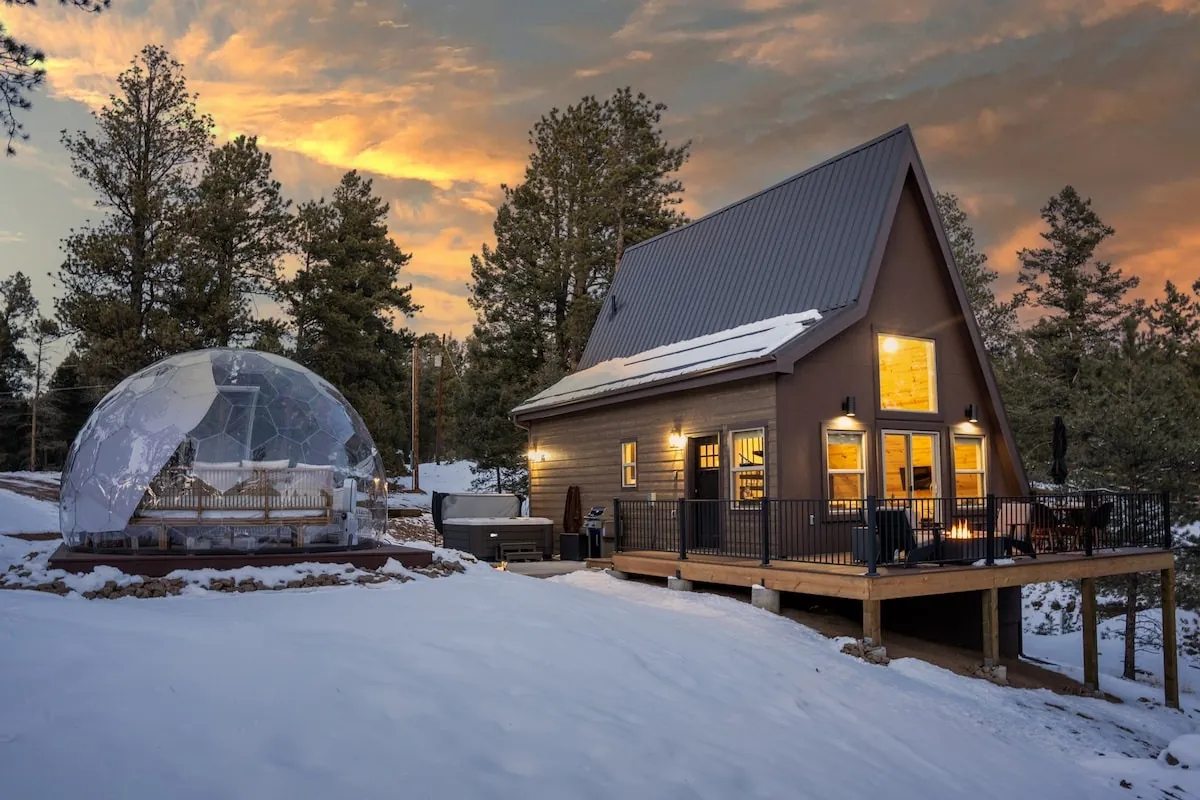
None of this is to say domes are automatically the right choice for every operator. There are real situations where a cabin or yurt makes more sense commercially, and it’s worth being honest about them.
If your land is subject to strict planning constraints that favour traditional timber structures, a cabin may be the path of least resistance even if the numbers are slightly lower. If your primary market is large-group summer hen parties, a cluster of bell tents at a low unit cost may outperform a single dome despite the shorter season. If you’re building a themed site where every unit must feel like a specific aesthetic world, the yurt’s cultural story may be worth more than a few extra occupied nights.
But for the default case — an operator looking to build a year-round hospitality business that earns consistently across all four seasons — the occupancy gap is too large to ignore. The dome’s structural advantages compound over a 12-month calendar in ways that short-season structures simply can’t match.
Owning a dome doesn’t guarantee 70% occupancy. Operators who hit the top of the range are doing a handful of specific things well, and they’re worth flagging for anyone planning their first season.
Photograph the dome properly before you list. Daytime landscape shots, sunset interiors, night-sky long exposures, and a few detail shots of the bed and fireplace. The difference between a listing that converts at 4% and one that converts at 12% is almost always the photography.
Price for the season, not for the year. Build a rate calendar with at least four tiers: peak summer, shoulder, off-peak, and event weekends. Lean into dynamic pricing rather than setting one “average” rate that leaves money on the table half the year.
Create at least one winter-specific experience. A stargazing kit, a fondue package, a log-fire evening, a proper reading corner. Something that gives a guest a reason to book in February rather than waiting until May. This is what turns a 12-month structure into a 12-month business.
Respond to inquiries fast. Platform algorithms reward response times under an hour. A dome with a slow host still converts worse than a cabin with a fast one.
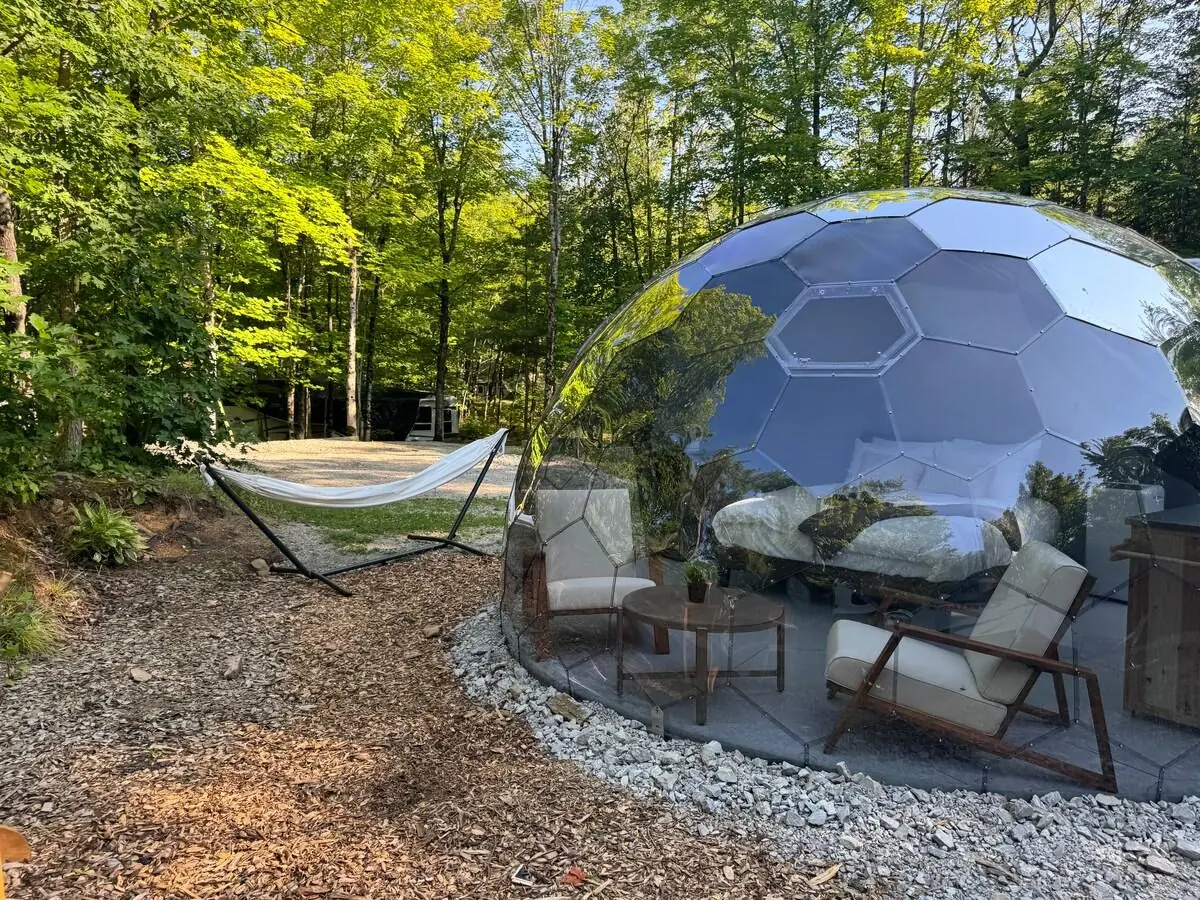
If you’re sizing up glamping structures purely on the basis of how many nights a year they’ll actually earn revenue, the data consistently points in one direction. Domes don’t win because they’re fashionable — they win because they’re genuinely year-round, they trigger a booking impulse on listing platforms, and they support a higher nightly rate that enables smarter pricing across the full calendar.
For operators who want the economics to make sense on day one rather than year three, that combination of structural advantages is hard to replicate with any other format. The occupancy gap between a well-run dome and a well-run yurt isn’t a marketing story — it’s the predictable outcome of four compounding advantages playing out across twelve months of calendar.
Ready to dig deeper into the numbers? Our full breakdown of how glamping operators pay off a dome in one season pairs the occupancy story above with real ROI data and payback timelines from working operators.