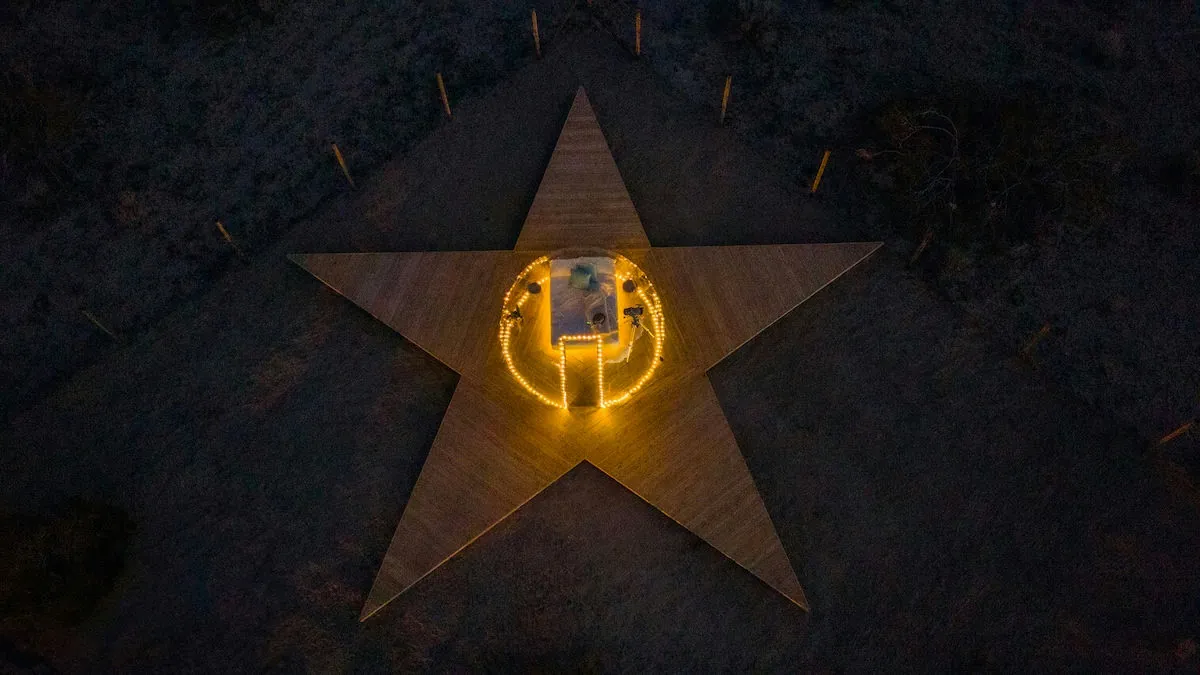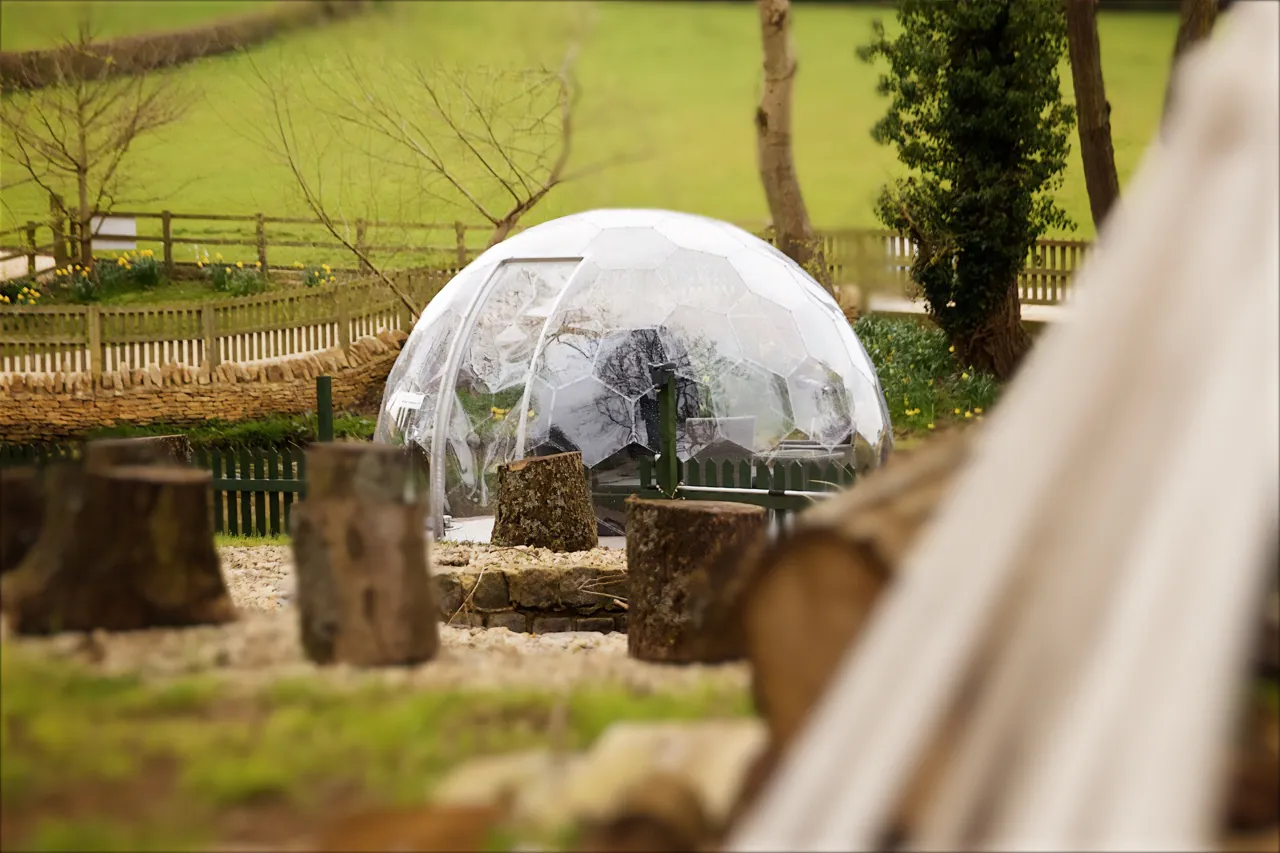



It’s the last hour of dusk. The kettle is on, the blanket is out, and the first star has just appeared.
There aren’t many things a summer evening in your garden can do that feel like an event. This is one of them.
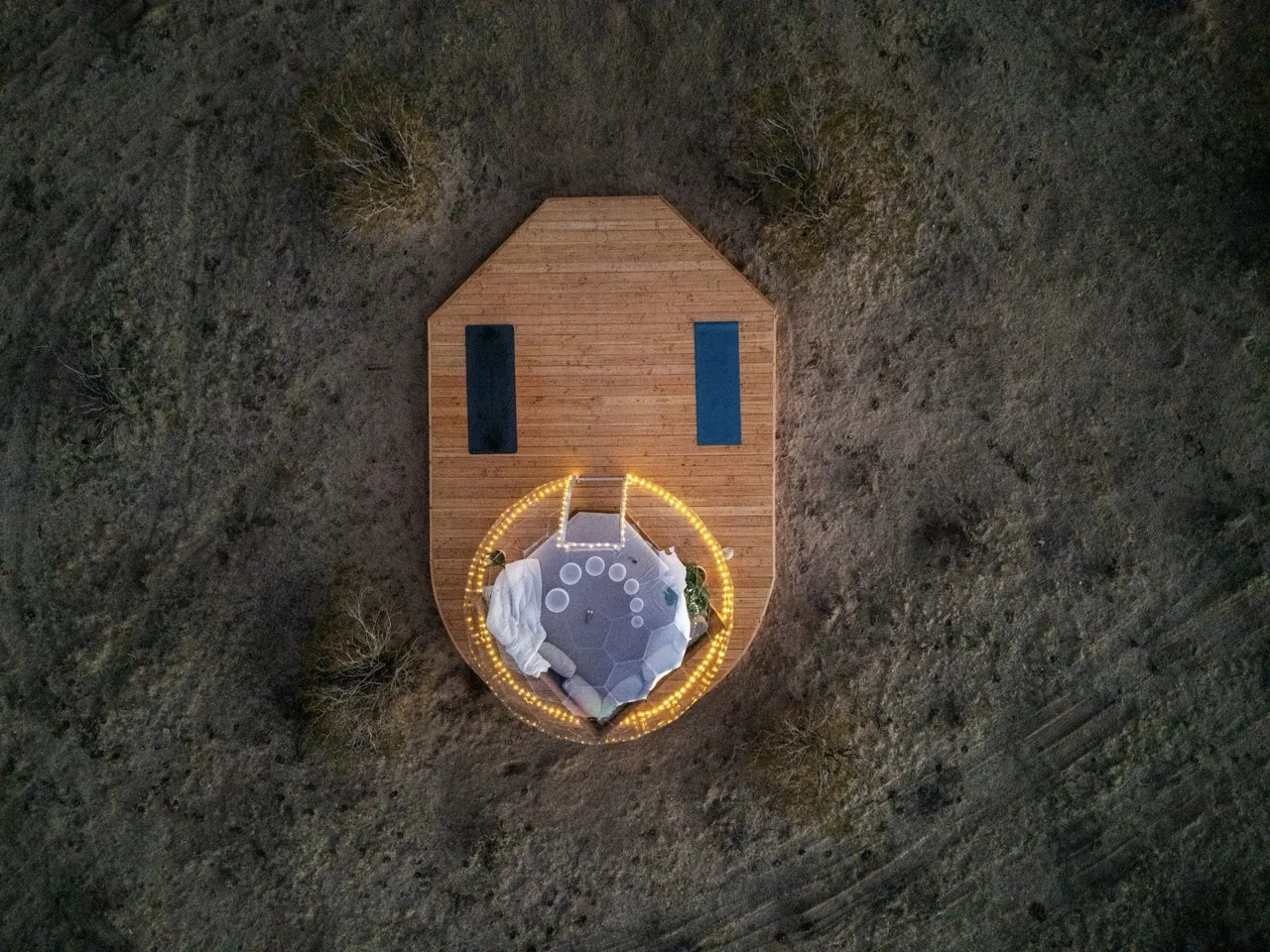
The first time you lie back in a dome and look up, you notice something. The night sky doesn’t sit at the top of a window frame — it surrounds you. The panels disappear after about thirty seconds. What’s left is sky, in every direction your eye can travel.
That’s the whole pitch. Most of us only ever see the night sky through a window or above a rooftop. A dome gives you the kind of view that, until recently, was reserved for observatories and very dark holidays.
You don’t need any equipment. You don’t even need to know what you’re looking at. The drama is already there.
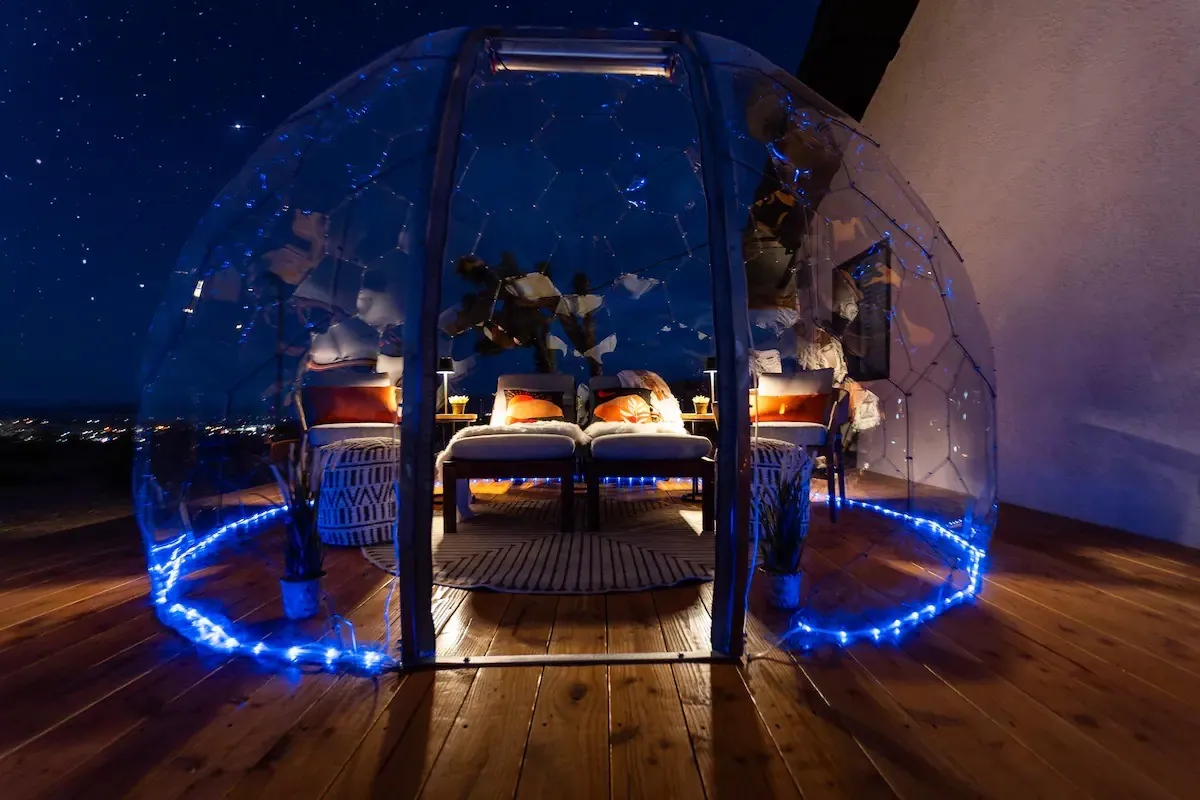
If you’re still planning where to site your garden Hypedome, two things matter most for stargazing.
Distance from your house lights. Even a curtain-drawn window five metres away will brighten the sky inside the dome noticeably. The far end of the garden is almost always the right answer.
An open southern view. For UK, US, and EU viewers, most of the interesting summer constellations rise in the south. A tall hedge or building directly to the south kills half the show. Look up at the southern horizon from where the dome would sit, and ask yourself whether you can see clear sky.
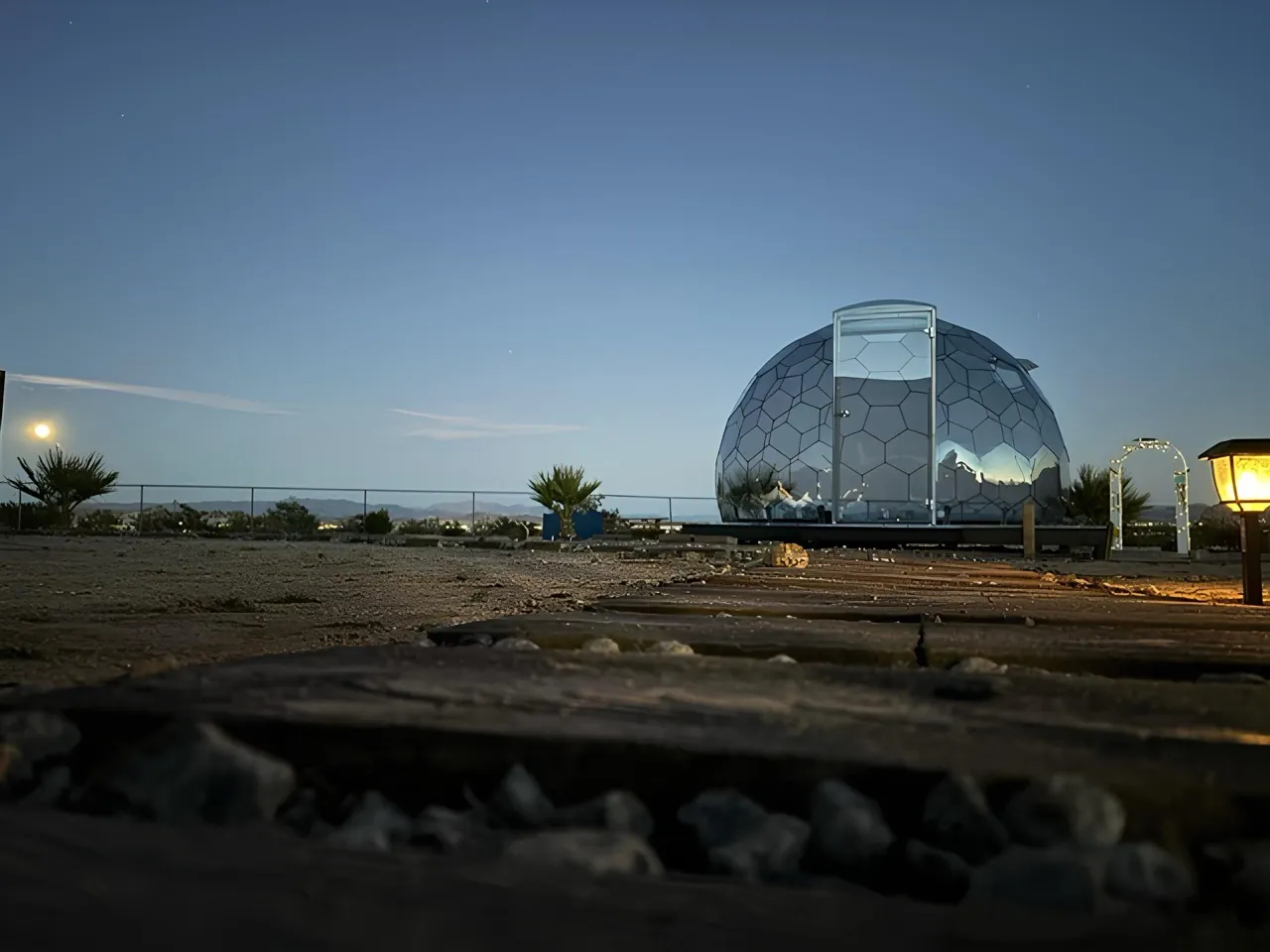
Light pollution is the single biggest thing standing between you and a Milky Way moment. The good news: most of what makes it bad is inside your control.
Three things to switch off the moment you sit down to look up:
Inside the dome itself, dim or switch off the lights for the last ten minutes of dark adaptation. Your eyes will adjust, and what looked like a faint grey sky will start to fill in with stars you didn’t know were there.
If you want to get scientific about it, the International Dark-Sky Association’s Bortle scale tells you how dark your particular sky is. Most UK suburbs sit at Bortle 5–6, better than central London (8–9) and worse than rural Wales (2–3). A dome at the bottom of a Bortle-5 garden is still a genuinely impressive viewing setup.
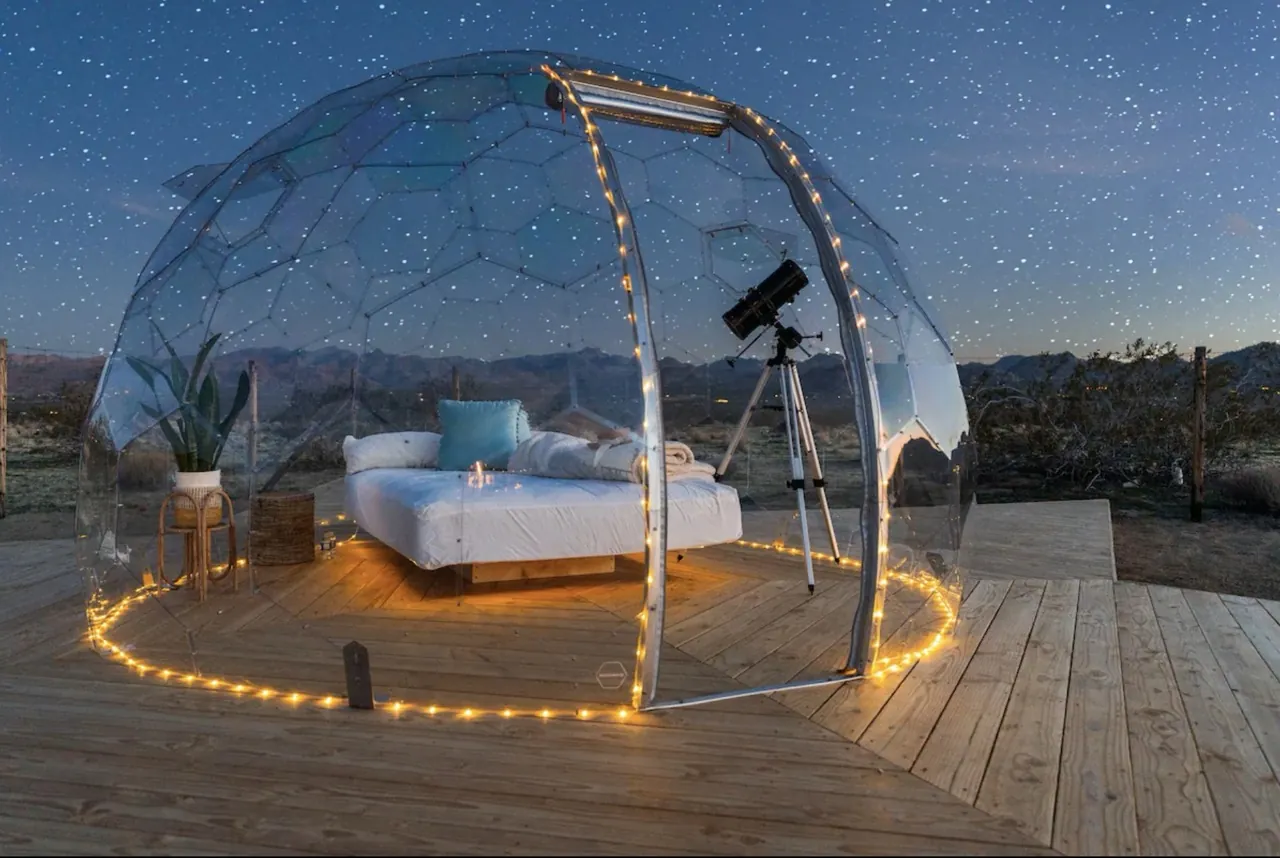
You don’t need a telescope. Here’s what’s visible to the naked eye on a clear July or August night.
The Milky Way. The band of light arching across the southern sky from about 11 pm onwards. The single most arresting thing in a summer dome.
Mars and Jupiter. Usually the brightest non-star points up there. No equipment needed.
The Perseid meteor shower. Peaks around 12–13 August every year. The single best night of the year for backyard stargazing in the Northern Hemisphere — expect 50–100 visible meteors an hour at peak.
The Summer Triangle. Three bright stars — Vega, Deneb, Altair — forming a triangle directly overhead from June through September.
The Sky Tonight or Stellarium apps (both free) will label what’s above you in real time. Point your phone at the sky and read the names.
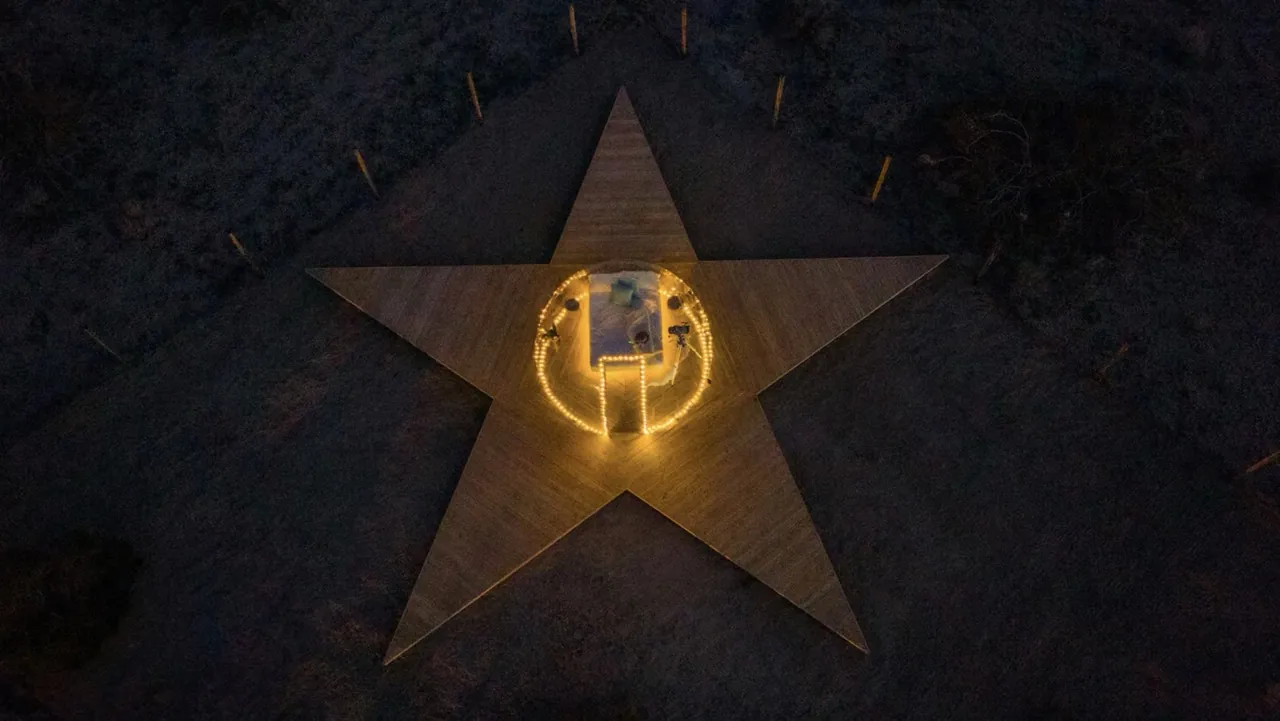
If stargazing turns out to be a thing you fall for, two upgrades stand out.
A pair of good binoculars (around £80–120) is the best upgrade for the money. They show the moon’s craters in detail, Jupiter’s four largest moons, and meteor showers in proper resolution. No setup. No learning curve.
A starter refractor telescope (£200–400) is a step up but adds complexity. If you’re not yet sure stargazing is for you, start with binoculars.
Either way, the dome itself is the bigger upgrade than any optics. Comfort and view first. Magnification later.
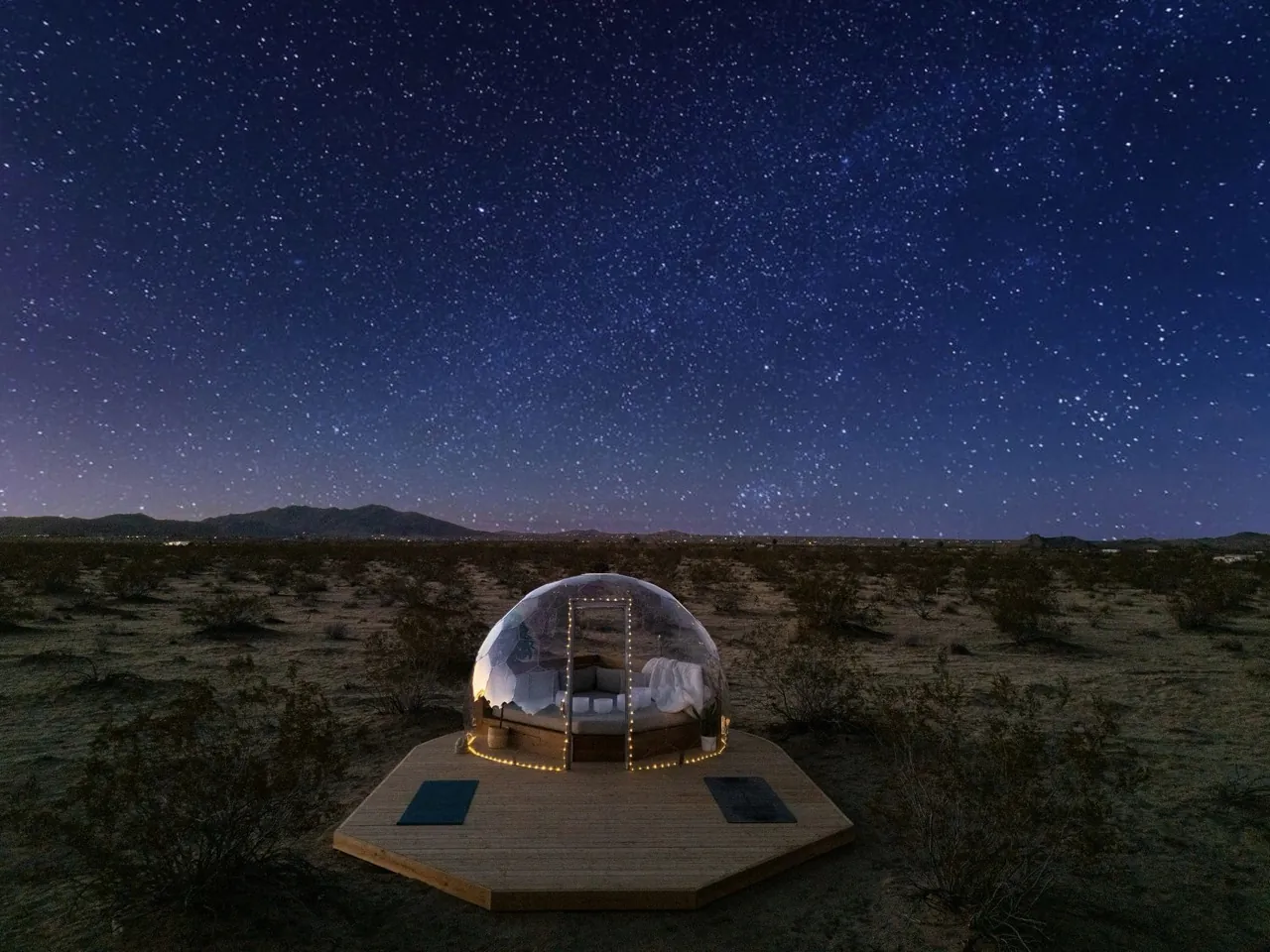
If you run a glamping site or a short-term rental, this is the kind of amenity that pulls a booking out of nothing. “Stargazing dome” is one of the higher-intent search terms on Airbnb’s Unique Stays — guests don’t drift into it, they search for it.
A dome with a clear apex, a properly dark site, and a few thoughtful details on the listing (a telescope, a star chart, blackout blinds for full immersion) tends to command a premium nightly rate and fills the calendar quickly through peak season.
The photos take themselves. The reviews write themselves. Guests tell their friends in the kind of detail you can’t fake.
There’s a reason stargazing has stayed quietly popular for two thousand years. It’s the rare hobby that asks nothing of you except to look up.
A dome makes that easy. You’re warm, you’re comfortable, the sky is panoramic, and the rest of the world is on the other side of the panels.
The first night you do it properly, you’ll wonder why it took you this long.
Want a dome of your own?