


If you do only four things, do these – in this order:
You’re not trying to memorize 50 states worth of rules. You’re building a repeatable method that works anywhere: identify the AHJ, confirm zoning, confirm sanitation expectations, confirm fire/building triggers, then package it into a simple plan your county can review.
This post focuses on the most common route – private land. Public land is a different track and usually requires special authorizations, so we’ll only flag it briefly.
Most US glamping projects involve a permit stack. The exact names vary by county, but the categories are consistent:
The trick is not doing everything at once – it’s confirming what your specific site triggers.
Most glamping businesses operate on private land because you can usually get clear answers from your city/county on: “Is this allowed here, and what do you need?”
Public land (quick note): operating on federal/state land typically requires a formal authorization and comes with its own constraints (availability, seasonal limits, resource protection). If you’re curious what that looks like, start with the U.S. Forest Service special-use permits overview or the BLM Special Recreation Permits page – but keep it separate from your private-land plan.
In the US, your rules come from the AHJ – usually:
This matters because two parcels 10 minutes apart can be regulated by different rulebooks.
Step 1 isn’t a “permit hurdle” yet – it’s just navigation. Once you know your AHJ, you’ll go through two main gates: (Step 2) zoning/land use (is glamping allowed on this parcel?) and (Step 3) sanitation/health (what toilet/shower/wastewater setup is acceptable). After that, you’ll confirm any “trigger” items like building permits or fire review based on what you’re actually constructing.
Before you design domes, decks, string lights, or a bathhouse… ask one boring question:
“Is a campground / transient lodging / short-term accommodation allowed in this zoning district?”
You’ll typically get one of three answers:
This is why zoning verification is the best first move you can make.
If zoning is a “no”, nothing else matters – so getting this answer early saves the most time and money.
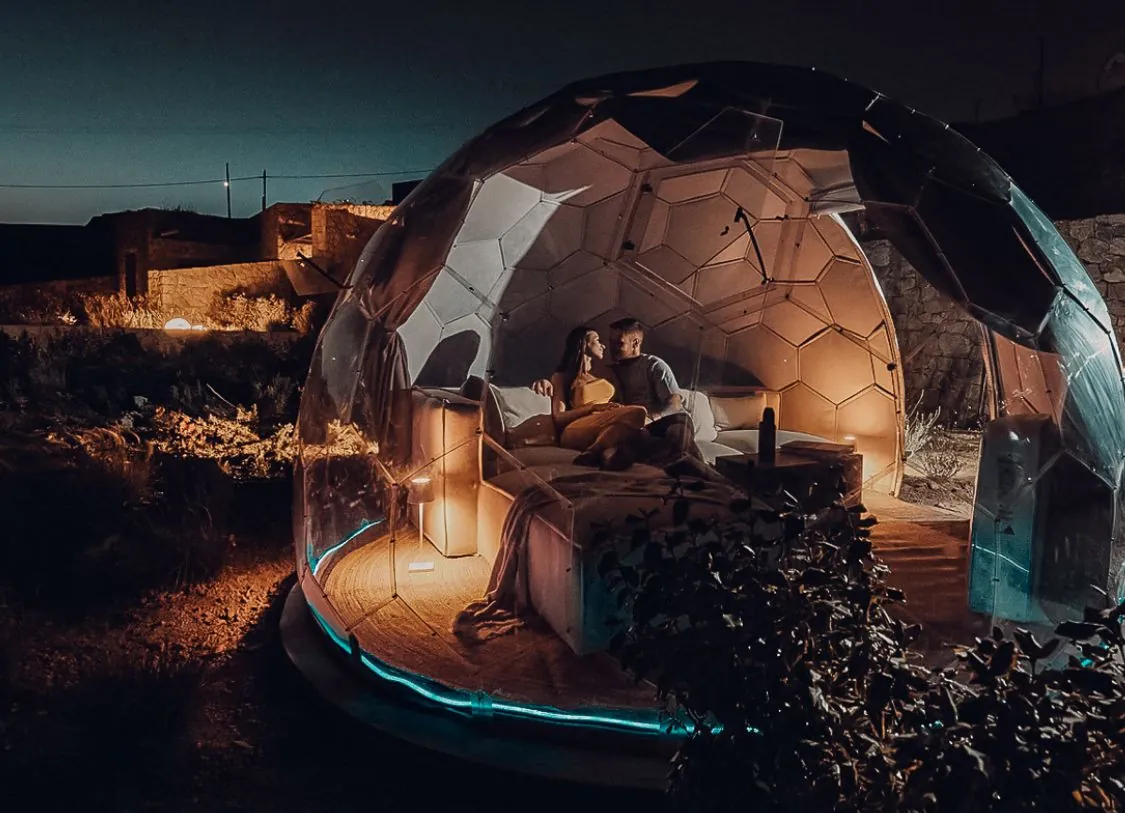
This is the “start smart” version: not barebones – just low-complexity.
On septic/onsite wastewater: the EPA explains that regulation is typically handled through state, tribal, and local programs, which is why requirements vary widely.
Why this approach works well for first-time operators:
It keeps the “permit stack” shorter while you validate demand and learn how your county thinks. You can upgrade later with much more confidence.
The 2021 International Fire Code includes a widely cited rule: tents/membrane structures over 400 sq ft require a permit/approval from the fire code official. See IFC §3103.2.
Some locally published versions also show common exceptions (for example, Seattle’s Chapter 31 includes an exception for tents used exclusively for recreational camping). See Seattle Fire Code Chapter 31 (2021), §3103.2.
Adoption varies by state and locality. Use the ICC Code Adoption Map as a starting point, then confirm with your AHJ.
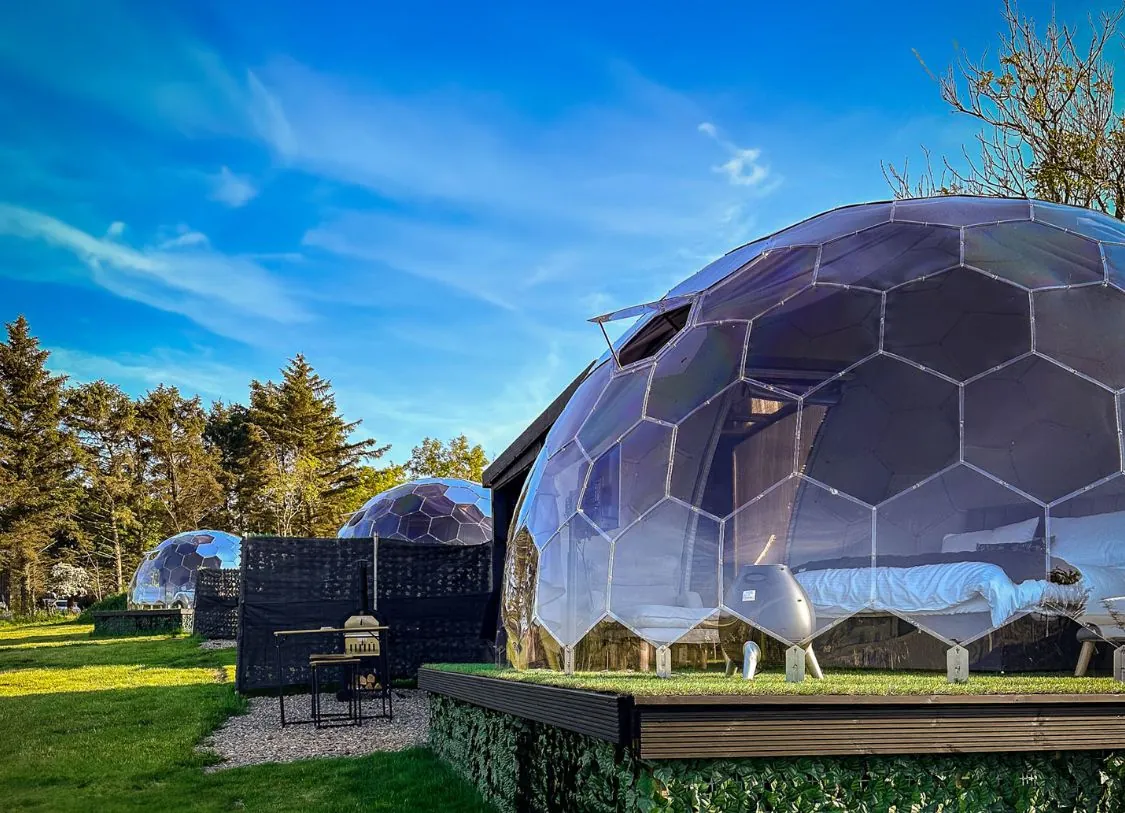
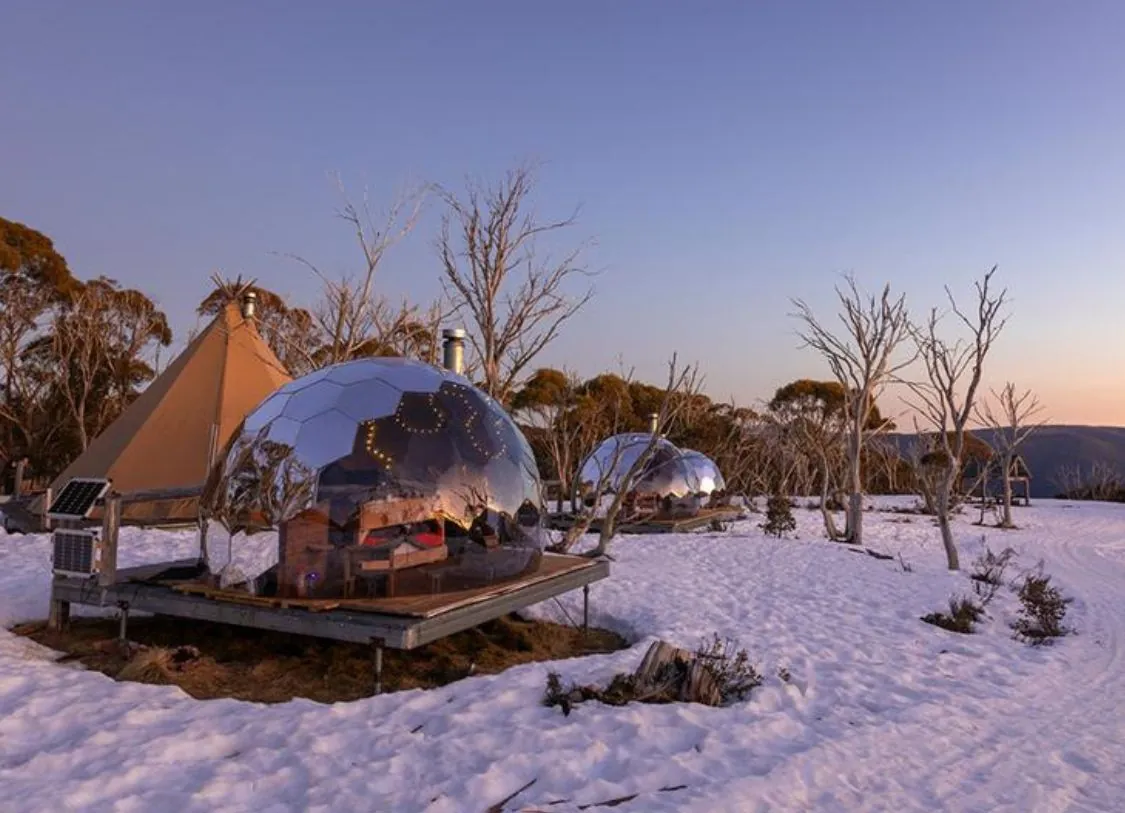
Hypedome footprints are all under 400 sq ft:
What this means in real life:
Being under 400 sq ft can simplify one common fire-code trigger in some areas – but you still need zoning approval, sanitation compliance, and (often) fire access/spacings expectations.
If you want to feel in control quickly, use this script. It’s designed to get clear answers without sounding like you’re trying to out-lawyer the county.
7. Do platforms/decks require permits? What about “temporary” anchoring systems?
8. What building/fire codes are enforced here and what edition (and any local amendments)?
9. What toilet/shower options are acceptable for a small glamping/campground setup, and what wastewater handling is required?
10. Any tent/membrane review needed, and what are your access/spacing/extinguisher/address signage requirements?
If you can get responses by email (even a short summary), you’ve basically created your project’s compliance blueprint.
Most officials are trying to answer three questions:
Where is it? What is it? How is it being managed safely and sanitarily?
A strong “starter pack” (often enough to begin):
Counties/cities want to understand “how it looks” in the landscape. What works well:
If you’re using Hypedome domes, the Hypedome team can prepare visuals for your application – or help you prepare them. Contact us if you want support.
Yes, many founders handle the first phase themselves, especially for a small site:
Where pro help pays off fastest:
A sensible approach is: DIY the discovery and concept, then hire specialists only where the site truly triggers them.
When you add:
…expect more formal review across building, health, and fire. That’s normal – bigger sites have bigger impacts.
One extra topic that often appears as you scale: accessibility. The baseline reference is the 2010 ADA Standards for Accessible Design. How it applies depends on your facility type and classification, so it’s a “confirm early” item rather than a last-minute surprise.
1) Do I always need permits to start a glamping site?
You always need to confirm zoning/use. Beyond that, requirements depend on what you build and how your county classifies the operation.
2) Does being “small” mean I’m permit-free?
Not really. Size can reduce certain triggers (like the 400 sq ft tent/membrane rule in IFC-based areas), but zoning and sanitation are usually the first hurdles.
3) Where do I check what licenses and permits my business needs?
A good starting point is the SBA overview: Apply for licenses and permits.
4) What’s the #1 mistake new glamping founders make?
Buying/leasing land before confirming zoning and sanitation feasibility with the AHJ.
5) Do you need planning permission for glamping?
In the USA, the equivalent of “planning permission” is usually zoning/land-use approval (and sometimes a conditional/special use permit). In practice, you nearly always need to confirm with your city/county that a glamping-style use (campground/transient lodging/short-term accommodation) is allowed on your specific parcel. Even a small setup can trigger additional requirements if you build platforms, add electrical, or provide shared sanitation.
6) Do glamping pods need planning permission?
Often, yes – because “pods” are frequently treated as structures used for paid accommodation, which can trigger zoning approval and sometimes building/fire review, depending on how permanent they are and what infrastructure comes with them. The key isn’t the word “pod” – it’s how your local AHJ classifies the use (campground vs lodging), whether the structure is considered temporary or permanent, and whether you’re adding decks, utilities, or plumbing.